Salman Al-Nasser
Principal Architect
Most villa owners in Kuwait spend months choosing the right marble for their foyer. They’ll debate tile patterns, kitchen layouts, and ceiling heights until every square meter inside the building feels perfect. Then they hand the outdoor space to a landscaping contractor and hope for the best.
That’s a mistake. And it’s one we see all the time.
The landscape around your villa isn’t decoration. It’s the final room of the house, and in a country where evening temperatures between October and March make outdoor spaces the center of family life, that room deserves the same architectural thinking as every space inside the building. This guide covers how we approach landscape design for Kuwait villas at ZNSO Architects, from climate realities and material choices to pool integration, planting strategy, and the cultural spaces that make a Kuwaiti home complete.
Why Outdoor Space Is the Final Room of Your Villa
The Architect’s Perspective on Landscape Design
Here’s a question worth asking: should an architect design your garden, or should a landscaper?
The honest answer is both. But the architect needs to lead.
A landscaper excels at planting, irrigation systems, and ground cover. An architect thinks about spatial flow, sightlines, privacy, wind patterns, threshold transitions, and how the outdoor experience connects to every room inside the building. When those two perspectives work in sequence (architecture first, then landscaping execution), you get a property that feels whole.
“We design the outdoor space at the same time as the floor plan, not after,” says Salman Al-Nasser, Principal Architect at ZNSO Architects. “The garden, the pool, the shading structures, the boundary walls, they’re all part of one composition. If you treat landscape as an afterthought, you end up with a beautiful villa surrounded by a disconnected yard.”
This matters in Kuwait more than almost anywhere else. Your outdoor space has to perform in one of the most extreme climates on earth while also serving as the social heart of the home for six months of the year. That’s an architectural problem, not a decorating one.
How Kuwait’s Outdoor Culture Shapes Design Decisions
Kuwaiti families don’t just use their gardens. They live in them.
From October through March, the outdoor space becomes the default gathering point. Evening barbecues, extended family dinners, children playing after school, tea and conversation that stretches past midnight. The Khiran chalet culture (weekends spent at beachside retreats south of the city) reflects the same instinct: Kuwaitis want to be outside when the weather allows it.
Then there’s the diwaniya. This traditional gathering space, where men host friends and family for conversation and coffee, is one of the most important social elements in Kuwaiti residential design. Increasingly, homeowners want an outdoor version: a shaded, open air seating area that feels private, comfortable, and connected to the landscape without being enclosed.
These cultural patterns aren’t optional considerations. They shape every decision, from where you place the pool to how you orient shade structures to which zones get lighting for evening use and which stay dark for privacy.
Designing for Kuwait’s Extreme Climate
The Two Seasons of Kuwaiti Outdoor Living
Kuwait’s outdoor living calendar splits into two distinct seasons. The golden season runs from October through March, when evening temperatures range from 15 to 25°C and gardens become the center of family life. The engineered season covers April through September, when summer temperatures regularly exceed 50°C and outdoor spaces require architectural intervention to remain usable at all.
According to the Kuwait Meteorological Center, Kuwait receives an average of only 115 to 128mm of annual rainfall. To put that in perspective, London gets about 600mm. This makes water efficient landscape design not just preferred but essential for every residential project in the country.
Any architect or designer who shows you a lush, tropical garden render for a Kuwait villa without addressing irrigation demand and summer heat management is selling you a fantasy. Good landscape architecture for this climate starts with honesty about what the weather actually does, then engineers around those realities.
Shade Architecture: Pergolas, Canopies, and Cantilevered Overhangs
Shade is the single most important element in any Kuwaiti outdoor space. Without it, your garden is unusable for roughly half the year.
But shade isn’t just about putting a roof over things. The best shade design creates layers of protection that let light and breeze through while blocking direct sun. Here’s what works:
Retractable pergolas offer flexibility. Open them during the golden season to enjoy the sky, close them in April when the sun gets aggressive. Motor driven systems can connect to smart home systems that manage your outdoor environment, adjusting automatically based on time of day and temperature sensors.
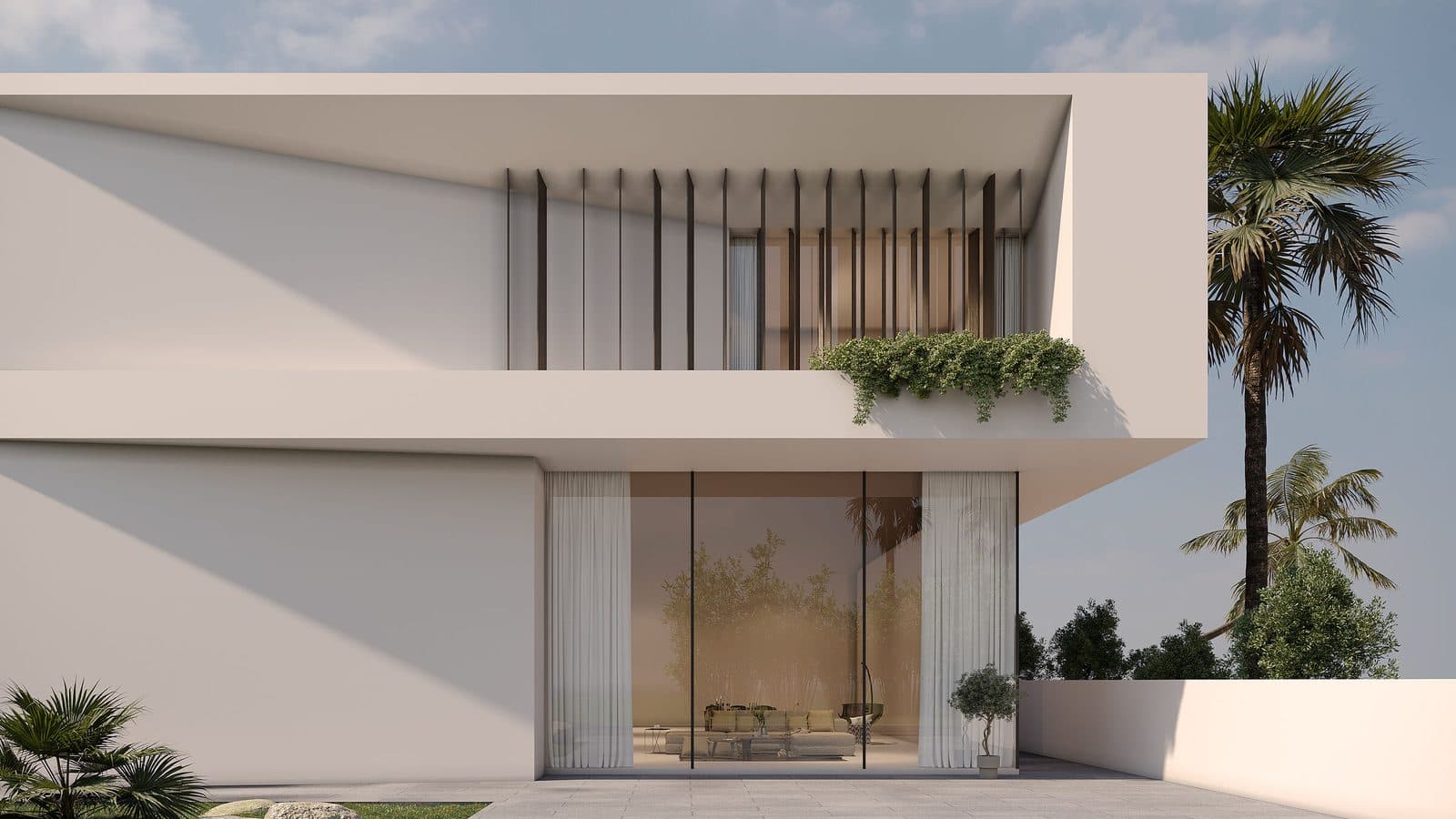
Cantilevered overhangs extending from the building itself create deep shadow zones along the villa’s perimeter. These are especially effective along the south and west facing walls, where summer sun exposure is most intense.
Mature tree canopy provides natural, layered shade that improves with time. Species like Prosopis cineraria (Ghaf) and Ziziphus spina-christi (Sidr) are native to the Gulf and evolved to provide broad canopy coverage in extreme heat. We’ll cover planting strategy in detail below.
“The goal is a shade gradient,” explains Al-Nasser. “You move from the fully conditioned interior, through a deep shade zone at the threshold, into dappled shade under a pergola, and finally into open sky at the far garden. That gradient is what makes the transition feel natural instead of shocking.”
Material Selection for 50°C Surfaces
At 50°C ambient temperature, dark stone pavers can reach surface temperatures of 70 to 80°C. That’s not just uncomfortable. It’s a burn hazard for bare feet, especially around pool areas where people walk without shoes.
Material selection for outdoor flooring in Kuwait has to account for Solar Reflectance Index (SRI), thermal mass, slip resistance when wet, and sand/dust tolerance. Here’s how the most common options compare:
| Material | Surface Temp at 50°C Ambient | SRI Rating | Barefoot Safe? | Maintenance |
|---|---|---|---|---|
| Light travertine (honed) | 45 to 52°C | High (SRI 30+) | Yes | Medium (needs sealing) |
| Honed limestone | 43 to 50°C | High | Yes | Medium |
| Engineered porcelain (light) | 48 to 55°C | Medium to High | Yes | Low |
| Dark granite | 65 to 80°C | Low | No | Low |
| Concrete pavers (standard) | 55 to 65°C | Medium | Marginal | Low |
| Natural sandstone | 50 to 58°C | Medium | Conditional | High (porous) |
For barefoot accessible areas like pool surrounds and outdoor lounging zones, light colored travertine and honed limestone remain the preferred choices across our projects. They stay cooler underfoot, age well in Kuwait’s dry climate, and develop a natural patina that looks better over time.
Pool Design as Architectural Integration
Positioning the Pool Within the Property Composition
A swimming pool in a Kuwaiti villa is not just a leisure feature. It is the primary microclimate device of the outdoor space. The evaporative cooling effect, combined with surrounding shade structures, creates a thermal transition zone between the extreme exterior heat and the conditioned interior.
That’s why pool placement matters so much. It’s not just about finding a flat spot in the yard.
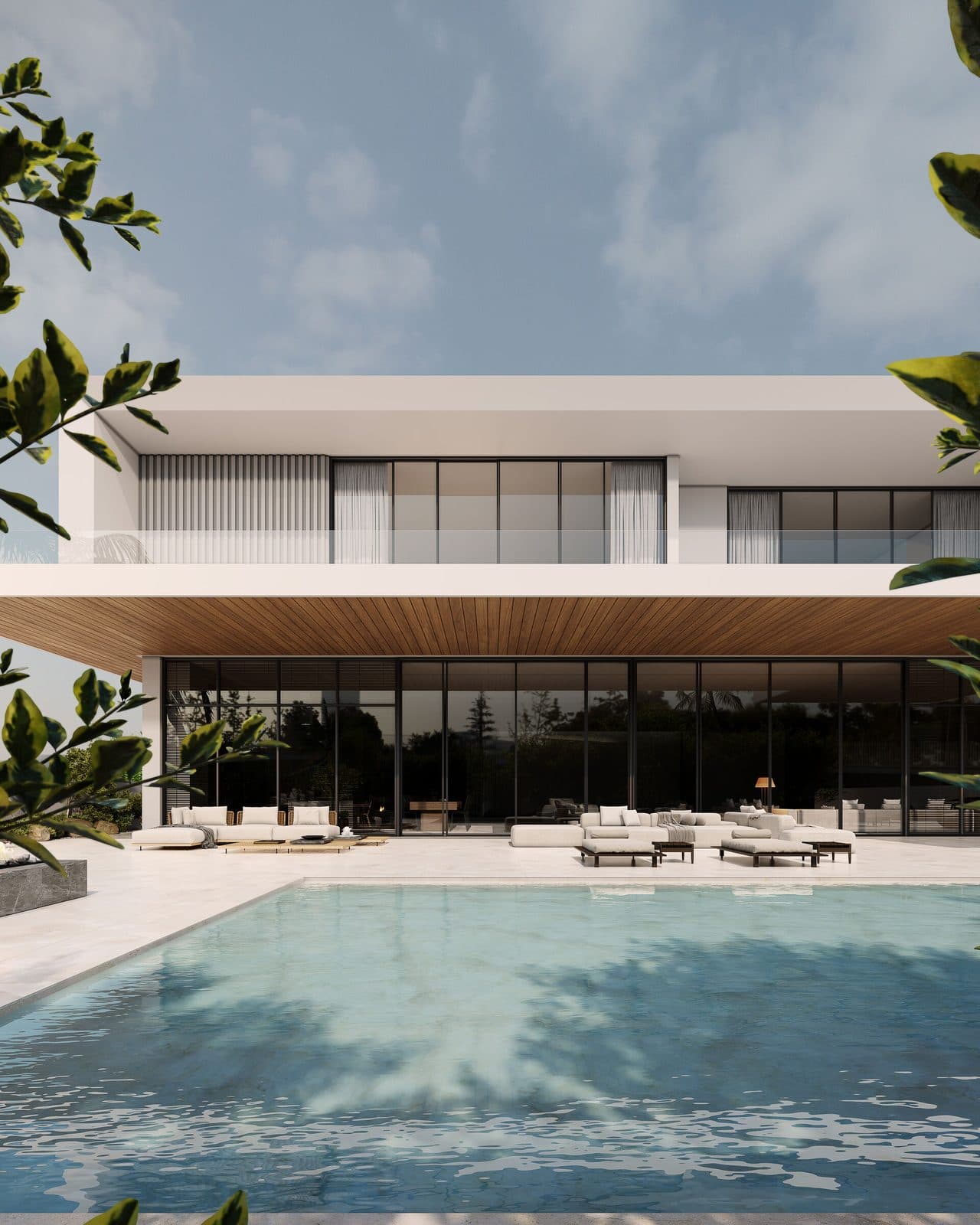
The pool should connect visually to the main living areas (so you see water from inside the house, which adds a cooling psychological effect). It should sit within reach of the primary shade structures. And it needs to relate to the boundary walls and planting zones in a way that creates privacy without making the pool area feel boxed in.
In our Poolside Pavilion project, we designed the pool as the organizing element of the entire outdoor space. The pavilion structure provides shade over the lounging area, the pool itself creates a visual axis from the main living room, and the surrounding planting softens the boundary walls. Every element relates to the pool, but the pool relates back to the building.
Year Round Pool Usability in Kuwait
Can you actually use a pool year round in Kuwait? The honest answer: mostly yes, but with some conditions.
During the golden season (October through March), pool water temperatures sit comfortably between 20 and 28°C without any heating. This is peak swimming season and the time when your pool gets the most use.
In summer (June through September), unshaded pools can reach 35 to 38°C, which feels more like a warm bath than a refreshing swim. Pool chillers (yes, Kuwait has a pool chiller industry) can bring summer water temperatures down to 26 to 28°C, but they consume significant energy. A better architectural approach is shade integration: a partially covered pool that blocks direct afternoon sun stays 3 to 5°C cooler than a fully exposed one.
During the brief winter dip (December through January), evening water temperatures can drop to 16 to 18°C. A simple solar heating system or heat pump handles this comfortably.
Hardscape and Softscape: The Landscape Palette
Hardscape Design for Kuwaiti Villas
Hardscape refers to the built, non-living elements of your landscape: pathways, terraces, retaining walls, steps, edging, and outdoor flooring. In Kuwait, hardscape typically accounts for 60 to 70% of the total landscape area because of the extreme climate. Large lawn areas just aren’t practical here the way they are in milder climates.
That higher hardscape ratio actually becomes a design opportunity. Paving patterns, level changes, built-in seating walls, water features, and material transitions can create visual richness and spatial variety that a flat lawn never could.
The key is using materials that serve double duty: aesthetically interesting and thermally appropriate. Light natural stone for primary walkways. Textured porcelain for pool decks. Gravel or decomposed granite for secondary paths and planting bed borders. Each material defines a different zone within the landscape.
Planting for Kuwait’s Arid Climate
Let’s be direct. You can’t grow everything in Kuwait’s climate. But what you can grow, when selected properly and irrigated efficiently, creates genuinely beautiful results.
The planting strategy for a Kuwait villa garden focuses on three layers:
Canopy trees for shade and structure: Prosopis cineraria (Ghaf), Ziziphus spina-christi (Sidr), Phoenix dactylifera (Date Palm), and Ficus nitida. These are the backbone of your garden. They take 3 to 5 years to mature but provide lasting, low maintenance canopy shade once established.
Mid-layer shrubs and hedging for privacy and structure: Bougainvillea (the queen of Gulf gardens, tolerates extreme heat), Nerium oleander, Tecoma stans (Yellow Bells), and Dodonaea viscosa. These provide color, screening, and wind buffering along boundary walls.
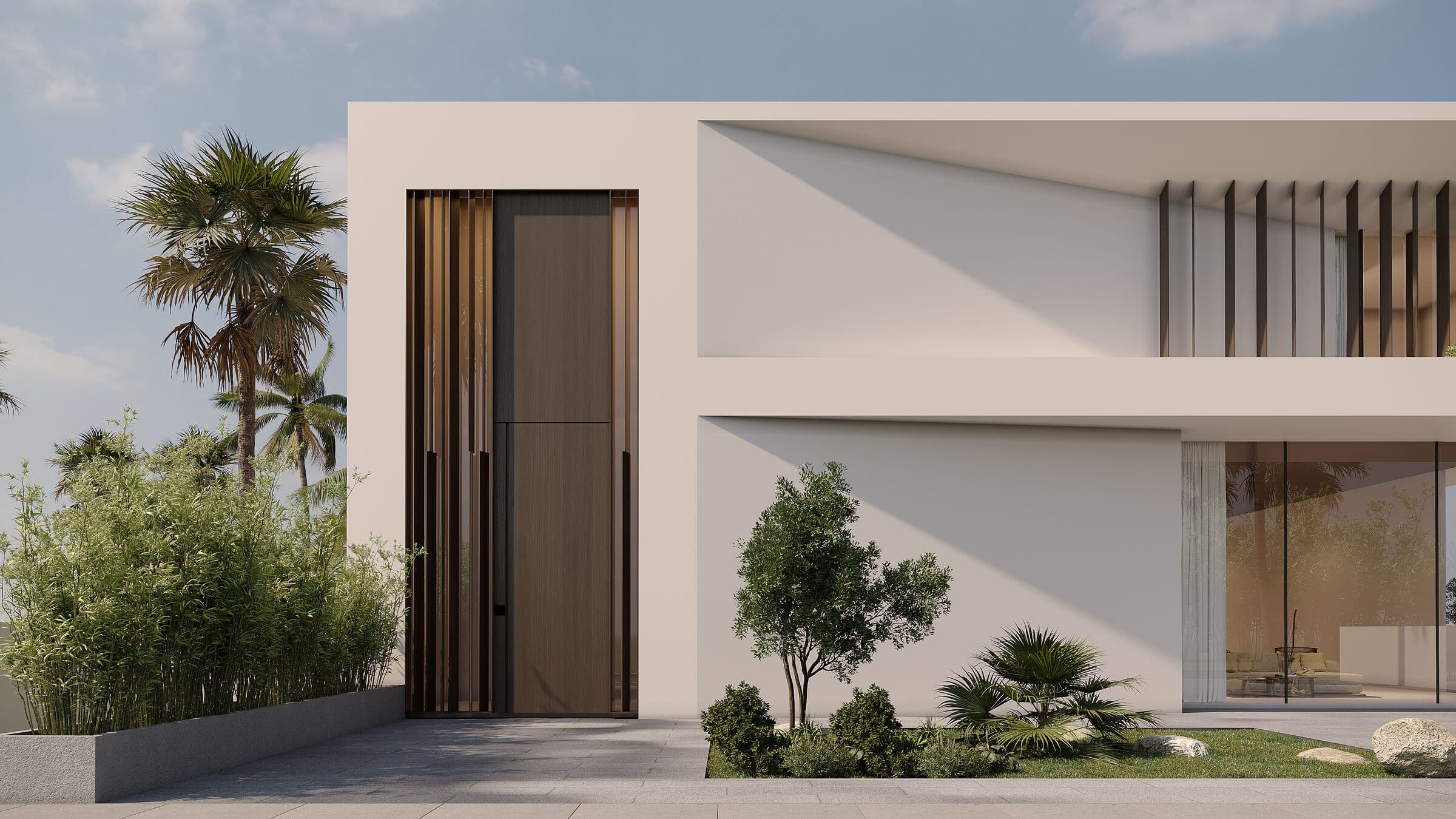
Ground cover and accent planting for texture: Aptenia cordifolia, Gazania, Portulaca, and various succulents. These fill the gaps, soften hardscape edges, and add seasonal color with minimal water demand.
All planting in Kuwait should run on drip irrigation, not spray systems. Drip irrigation delivers water directly to root zones, reducing evaporation loss by up to 60% compared to overhead spraying, according to research published by the International Center for Agricultural Research in Dry Areas (ICARDA). In a country with 115mm of annual rainfall, that efficiency isn’t optional.
For homeowners interested in integrating nature into your home through biophilic design, the planting strategy outdoors should feel connected to any indoor greenery. Using the same or related species inside and outside creates a visual language that bridges the threshold.
The Indoor Outdoor Threshold
Designing Smooth Transitions Between Interior and Garden
The moment you step from your air conditioned living room into a 45°C garden, something goes wrong. Your body recoils. Your brain says “go back inside.” That abrupt transition is a design failure, and it’s the reason so many beautiful Kuwait gardens go unused for months.
The solution is threshold architecture: designing the space between inside and outside as its own distinct zone, not just a door in a wall.
“Think of it as a gradient,” says Sarah Ahmed, Senior Interior Designer at ZNSO Architects. “You move from a fully conditioned room into a semi-enclosed veranda with ceiling fans and shade. Then into a covered terrace. Then into the open garden. Each step brings you a few degrees closer to the outdoor temperature, so by the time you’re in the sun, the transition feels gradual.”
Practically, this means designing deep overhangs (3 to 4 meters minimum for south facing openings), covered terraces with ceiling fans or misting systems, floor to ceiling sliding doors that blur the boundary between inside and outside, and consistent flooring materials that flow from indoor to outdoor. When you choose facade materials that transition to outdoor spaces, the visual boundary between building and landscape dissolves.
The goal is also maintaining a consistent material palette. If your living room uses light limestone flooring, extending a similar stone onto the terrace and pool deck creates the impression of one continuous space. This is where interior material palettes that extend outdoors make the biggest difference.
Boundary Walls as Design Opportunities
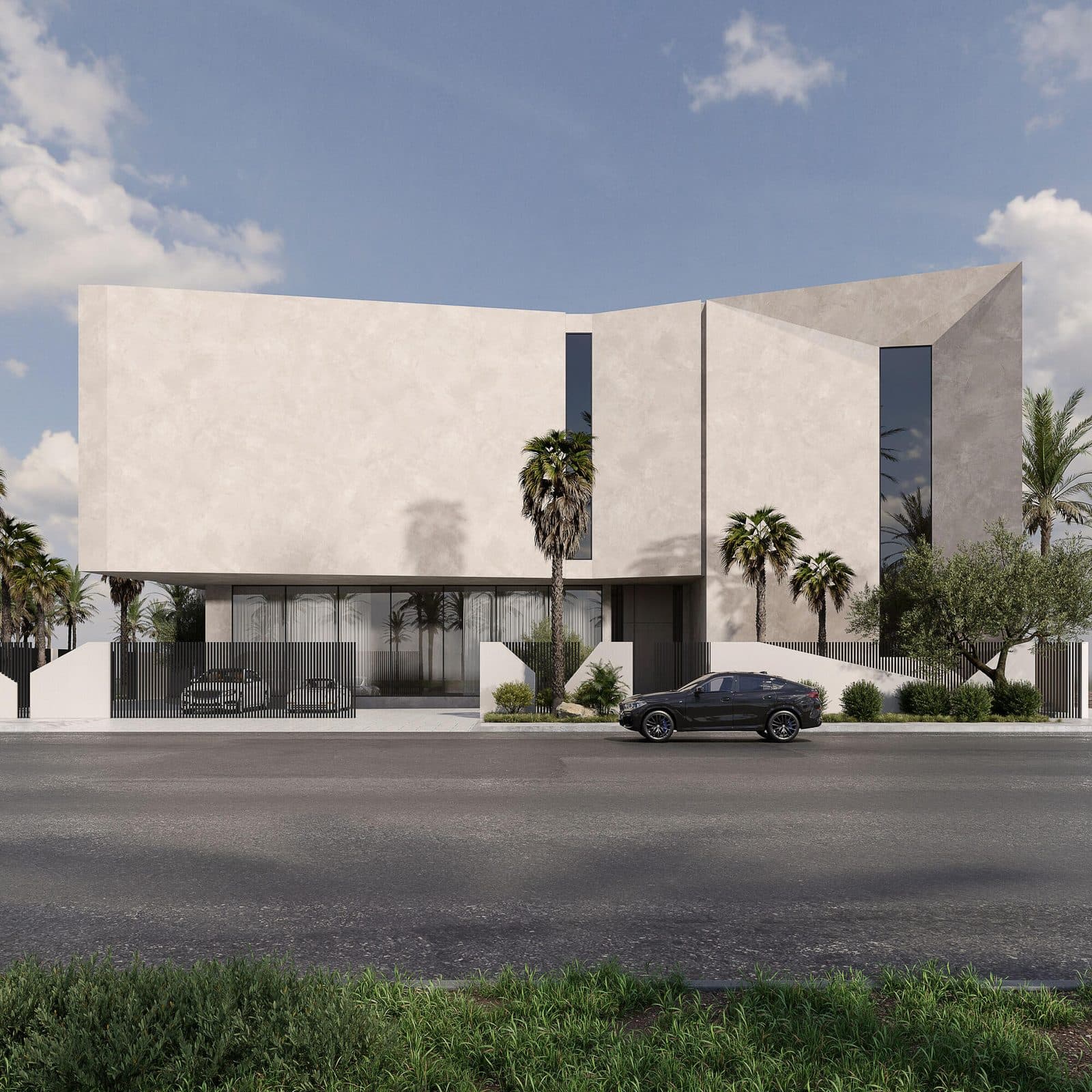
Every villa in Kuwait has boundary walls. Baladiya regulations require them, and cultural privacy expectations make them essential. Most homeowners treat them as a necessary background, build them from concrete block, render them white, and forget about them.
That’s a missed opportunity. Your boundary walls are the largest vertical surfaces in your landscape. They can become living green walls, textured feature panels, integrated seating alcoves, or lighting canvases for evening ambiance.
Climbing plants like Bougainvillea and Campsis radicans (Trumpet Vine) soften concrete walls within one to two growing seasons. Corten steel or natural stone cladding adds warmth and texture. Recessed LED strips turn a plain wall into a dramatic backdrop after dark.
In neighborhoods like Mishref and Surra, where villa plots sit close together, well designed boundary walls also serve as acoustic buffers, separating your outdoor entertaining area from neighbors without making the garden feel enclosed.
Outdoor Entertaining and Cultural Spaces
The Outdoor Diwaniya: Design Principles
The outdoor diwaniya is one of the most culturally significant elements of Kuwaiti villa landscape design. It serves as the social heart of evening entertaining, requiring careful attention to wind orientation, privacy screening, lighting, and acoustic separation from family areas.
A well designed outdoor diwaniya needs:
Wind orientation. Position the seating to catch prevailing northwest breezes (the dominant wind pattern in Kuwait from June through September). This provides natural cooling without relying entirely on fans or misting.
Privacy screening. The diwaniya needs visual separation from the family garden areas. Dense planting, lattice screens, or a slightly raised platform can create that distinction without building a solid wall.
Lighting for atmosphere. Warm, indirect lighting (2700K to 3000K color temperature) creates an inviting atmosphere. Avoid harsh overhead lights. Integrated step lights, uplighting on trees, and shaded pendant fixtures work best.
Acoustic comfort. Water features (even small ones) provide ambient sound that masks conversation from neighboring properties. This is a practical detail that many designs overlook.
Family Gathering Zones and Barbecue Areas
Beyond the diwaniya, Kuwaiti families need practical outdoor zones for everyday use: a barbecue and outdoor cooking area, a children’s play zone visible from the kitchen or family room, and flexible lawn or deck space for large gatherings during holidays and celebrations.
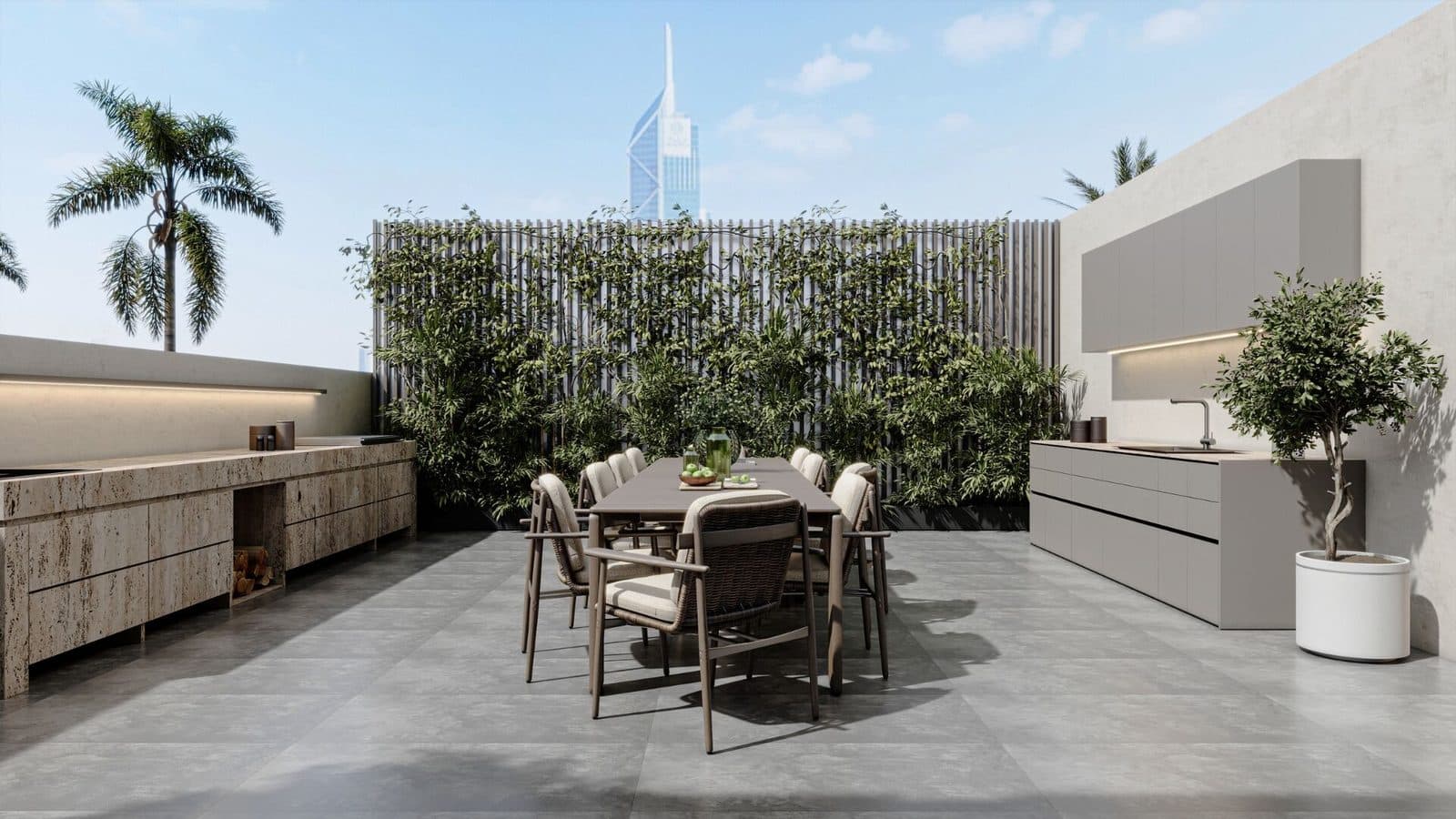
The outdoor kitchen in Kuwait needs special attention. Built in grills and prep counters should face away from prevailing winds (so smoke doesn’t blow toward seating areas) and sit under permanent shade structures. Granite or engineered stone countertops handle heat and outdoor exposure better than marble, which stains and etches in Kuwait’s dusty conditions.
Outdoor Lighting for Evening Use
Kuwait’s outdoor season is really an evening season. From October through March, families move outside after sunset, and the garden needs to work in the dark.
Good residential outdoor lighting uses three layers: ambient lighting (general illumination from overhead or wall mounted fixtures), accent lighting (uplights on trees, architectural features, and focal points), and task lighting (brighter focused light over cooking areas, dining tables, and walkways).
The common mistake is overlighting. Too many bright fixtures turn a garden into a parking lot. The best evening landscapes use soft pools of light that draw you from one zone to the next, with enough shadow to create depth and atmosphere.
What Does Landscape Design Cost in Kuwait?
This is the question every homeowner wants answered, and the honest response is that costs vary widely depending on scope, materials, and complexity. But here are some realistic frameworks for architect led landscape design in Kuwait:
Design fees (architect led): Typically 8 to 12% of the total landscape construction budget, or a fixed fee based on property size. For a standard 400 to 600 sqm residential plot, architectural landscape design fees in Kuwait generally range from KD 2,000 to KD 8,000.
Construction costs for a full landscape build (hardscape, softscape, irrigation, lighting, pool integration): KD 15,000 to KD 60,000+ for a typical residential villa, depending on material quality, pool inclusion, and the complexity of shade structures.
Ongoing maintenance: KD 80 to KD 250 per month for a professionally maintained villa garden, including irrigation management, planting care, pool maintenance, and seasonal adjustments.
These numbers are approximate, and premium projects in areas like Hateen or Abdullah Al-Salem can exceed these ranges substantially. But they give you a starting point for budgeting.
How ZNSO Designs the Complete Property Experience
At ZNSO Architects, we don’t separate the building from its landscape. Every residential project starts with a site analysis that maps sun angles, wind patterns, street orientation, boundary conditions, and how the family actually intends to use both indoor and outdoor space.
In the Dana Residence, we designed the architecture, interiors, and landscape as one integrated system. The courtyard garden connects the private family wing to the guest diwaniya. The pool relates to the living room through full height glazing. The boundary planting creates privacy from the street while maintaining light and airflow.
Our approach draws on the same sustainable building strategies for Kuwait’s climate that we apply to the building itself: passive cooling, water efficiency, material longevity, and honest performance in extreme heat.
The landscape is the last thing a visitor sees before entering your home and the first place your family gathers when the evening breeze arrives. It deserves architectural thinking.
Ready to design your entire property, not just the building? Schedule a consultation with ZNSO Architects.
Frequently Asked Questions
Should an architect or landscaper design my garden?
An architect should lead the design process, especially for new builds or major renovations. Architects plan spatial relationships, sightlines, threshold transitions, and how the outdoor space connects to the building. A landscaper then executes the planting, irrigation, and ground cover based on the architectural plan. For the best results, both work together with the architect setting the framework first.
Can I use my outdoor space year round in Kuwait?
Kuwait’s outdoor living season runs primarily from October through March, when evening temperatures range from 15 to 25°C. During summer months (April through September), temperatures regularly exceed 50°C, making unshaded outdoor spaces uncomfortable. With proper shade architecture (pergolas, cantilevered overhangs, misting systems) and climate adapted design, you can extend usability into early mornings and late evenings during summer, but full day outdoor use in July and August requires serious engineering.
What outdoor flooring stays coolest in Kuwait’s heat?
Light colored natural stone performs best. Honed travertine and limestone stay closest to ambient temperature (45 to 52°C at 50°C air temperature), compared to dark granite which can reach 70 to 80°C. Engineered porcelain with high Solar Reflectance Index (SRI 30+) is also a good option with lower maintenance. Avoid any dark colored paving in areas where people walk barefoot, especially around pools.
How much water does a Kuwait garden need?
Kuwait receives only 115 to 128mm of annual rainfall, so virtually all garden water comes from irrigation. A well designed drip irrigation system for a 300 to 500 sqm planted area typically uses 2,000 to 4,000 liters per day during summer peak and 500 to 1,500 liters per day during winter. Choosing drought tolerant species (Ghaf, Sidr, Bougainvillea, Date Palm) and using drip rather than spray irrigation can reduce water consumption by up to 60%.
What are the Baladiya setback rules for landscape structures?
Kuwait Baladiya (municipality) regulations require specific setbacks from property boundaries for permanent structures. Boundary walls have height restrictions (typically 2.4 to 3 meters), and accessory structures like pergolas, pool equipment rooms, and outdoor kitchens must maintain minimum setbacks from boundaries (usually 1 to 2 meters, depending on the zone and structure type). Always confirm current requirements with your architect or directly with your local Baladiya office before starting construction, as regulations can vary by area and are updated periodically.
When is the best time to start a landscape project in Kuwait?
The ideal time to begin landscape construction in Kuwait is late spring through early autumn (May through September). This seems counterintuitive because it’s the hottest period, but it means your hardscape and planting are established before the golden outdoor season begins in October. Planting during early autumn (September through October) gives trees and shrubs the cooler months to establish root systems before facing their first summer. Starting a landscape project in November or December means you lose the first outdoor season to construction.
Your Villa Is More Than a Building
Every room inside your villa got attention, thought, and professional design. Your outdoor space deserves the same.
Kuwait’s climate is demanding. It limits what you can plant, when you can be outside, and what materials will last. But those constraints, when understood and respected, actually produce better design. They push architects to think harder about shade, transition, material performance, and how people really use outdoor space in this part of the world.
The best Kuwaiti villas aren’t the ones with the biggest gardens or the most expensive stone. They’re the ones where inside and outside feel like one experience. Where the heritage of the Kuwaiti courtyard meets modern spatial thinking. Where every square meter of the property, building and landscape together, works as a single architectural composition.
If you’re planning a new villa or rethinking the landscape around your existing home, start with the architecture. The garden will be better for it.