ZNSO Architects
Design Studio
Most smart home projects in Kuwait start in the wrong place. A homeowner finishes construction, calls an automation installer, and then watches as crews cut open freshly plastered walls to run cables that should have been there from the beginning.
That's the expensive way to do it. And it's entirely avoidable.
Smart home design in Kuwait isn't about filling a villa with gadgets. It's about building intelligence into the architecture itself, so that the technology works quietly in the background and the home feels effortless. When it's done right, you don't see the tech at all. You just feel the house responding to your life.
This guide explains how architects approach smart home planning from the very first sketch, why that matters in Kuwait's unique climate and cultural context, and what every villa owner should know before breaking ground.
Why Smart Home Planning Starts with Your Architect, Not Your Installer
Here's a question that comes up constantly: should you hire an architect or a smart home installer first?
The answer is your architect. Every time.
An installer thinks in products. They'll recommend a control system, a set of speakers, a security package. All good things. But they're designing around an existing structure, not with it. That means visible cable runs, equipment closets squeezed into afterthought spaces, and technology that sits on top of the architecture rather than inside it.
An architect thinks in systems. When we plan smart home integration at the concept stage, technology becomes part of the building's DNA. Conduit pathways are mapped during structural design. Equipment rooms are sized and ventilated properly. Switch plates, sensors, and keypads land exactly where they make spatial sense, not just where wiring happens to reach.
"The smartest villa is one where you never notice the technology. That only happens when the architect and the technology consultant are working together from day one, not after the concrete is poured."
Salman Al Nasser, Principal Architect, ZNSO Architects
This is what the industry calls an architecture first approach, and it's the difference between a home that feels intelligent and one that feels like a showroom for products.
The Invisible Technology Approach: What It Means for Kuwait Villas
The concept of invisible technology is simple: every automated system in the home should be concealed within the architecture. No exposed wiring. No bulky wall panels. No equipment cluttering living spaces. The speakers disappear into ceilings. Keypads sit flush with the wall finish. Motorized shading is recessed into ceiling pockets that were designed for exactly that purpose.
This matters for Kuwait villas specifically because of how families live here. Spaces like the formal majlis, the diwaniya, and the family living areas carry real cultural weight. Technology that interrupts the design language of these rooms feels intrusive. A flush mounted keypad in brushed bronze that matches the interior material selection is invisible. A plastic wall tablet bolted next to a hand carved wooden door frame is not.
The market agrees that this direction makes sense. According to Mordor Intelligence, the Middle East smart home market is projected to reach approximately USD 24.7 billion by 2030, growing at around 19% annually. Statista projects Kuwait's own smart home market at USD 33.3 million by 2028. The demand isn't theoretical. Kuwaiti homeowners are actively investing in smarter living, and the ones getting the best results are those who plan it into the architecture from the start.
Five Smart Systems Every Kuwait Villa Should Design For
Not every smart system carries equal weight in Kuwait. Climate, culture, and lifestyle shape which automations matter most. Here are the five systems that deliver the highest impact when designed into a Kuwaiti villa from the ground up.
Climate Control Automation
This is the most important smart system for any villa in Kuwait. Full stop.
When summer temperatures push past 50°C, your cooling system isn't a comfort feature. It's the most critical performer in the building. Smart climate control goes well beyond a programmable thermostat. It coordinates zoned HVAC, motorized exterior shading, and automated window treatments into a single responsive system that adjusts throughout the day based on sun position, occupancy, and even weather forecasts.
Here's what that looks like in practice. At 6 AM, the east facing shading deploys automatically as the sun rises. The HVAC system pre cools occupied zones before the family wakes. By midday, when thermal load peaks, the system has already adjusted airflow distribution and closed exterior shading on the south and west facades. The result is a villa that stays comfortable without the owner touching a single control, and one that uses considerably less energy doing it.
This is where smart automation and passive cooling strategies work together. Passive design reduces the baseline cooling load. Smart automation manages what's left, dynamically and efficiently.
Intelligent Lighting and Circadian Design
Good lighting design is already central to residential architecture. Smart lighting takes it further by syncing your home's artificial light with your body's natural rhythms.
Circadian lighting systems adjust color temperature and intensity throughout the day. Cool, energizing light in the morning. Warm, relaxed tones in the evening. During Ramadan, when family routines shift dramatically (late night suhoor meals, afternoon rest, evening gatherings after iftar), a smart lighting system adapts those profiles automatically. No one has to walk through the house adjusting dimmers.
This connects directly to the natural light optimization principles we've written about before. The goal is the same: light that supports wellbeing. Smart systems simply extend that goal into the hours when the sun isn't doing the work.
Privacy First Security Architecture
Security in a Kuwaiti villa isn't just about cameras and alarms. It's about designing systems that respect how families actually live.
Multigenerational households need layered privacy. The diwaniya, where male guests gather, operates on a different access schedule than the family quarters. Women's living areas require their own security zones with independent controls. Guest entrances, staff access points, and children's outdoor areas all need distinct monitoring and permissions.
A privacy first security system handles all of this through zoned automation. The diwaniya entrance unlocks on a separate schedule from the main family entry. Security cameras in guest areas activate only when visitors are expected. Interior motion sensors distinguish between household members and visitors using presence detection, so the family never feels surveilled in their own home.
This is the kind of design that only works when the architect plans it into the spatial layout from the beginning. Retrofitting zone based security into a villa that wasn't designed for it means compromises at every turn.
Entertainment and Media Integration
A concealed home cinema. Distributed audio that follows you from the living room to the terrace without a visible speaker in sight. A media room where the screen descends from a recessed ceiling pocket and the ambient lighting shifts to theater mode with a single voice command.
These systems are impressive when done well, but they require serious architectural planning. Speakers need cavity depth in walls and ceilings. Projector lifts need structural support. Media equipment generates heat and needs ventilated, accessible, but hidden equipment rooms. The architect's job is to create all of those accommodations so the technology integrator has clean, purposeful spaces to work with.
Energy Monitoring and Management
Kuwait's residential sector is the country's dominant electricity consumer. Research from the Kuwait Institute for Scientific Research (KISR) indicates that compliance with the Energy Conservation Code of Practice for Buildings (ECCPB) can reduce consumption by up to 31%.
Smart energy monitoring makes that reduction visible and manageable. Real time dashboards show exactly where electricity is going, room by room and system by system. Automated schedules power down unoccupied zones. Smart HVAC management alone can deliver meaningful savings in a villa where cooling accounts for the majority of the energy bill.
For homeowners building new villas, designing energy monitoring into the electrical plan from day one means every circuit is metered, every system is trackable, and efficiency isn't a guessing game.
Smart Home Wiring: What Your Architect Needs to Plan Before Construction
A smart home requires a professional low voltage wiring plan developed and executed during the open stud phase of construction. That's the window after framing is complete but before walls are closed. Once drywall goes up and finishes are applied, running new cable becomes destructive and expensive.
Here's what the wiring plan covers:
Structured cabling is the backbone. This is the network of data, audio, video, and control cables that connects every smart device in the home to a central hub. Your architect specifies the routing through the floor plan, making sure cables take efficient paths that don't conflict with plumbing, HVAC ductwork, or structural elements.
A dedicated equipment room houses the brains of the operation: network switches, automation controllers, amplifiers, security recorders, and power management. This room needs adequate ventilation (equipment generates heat), stable power supply, and easy access for maintenance. It should never be an afterthought closet.
Conduit pathways are the insurance policy. Even the best technology plan can't predict what you'll want to add five years from now. Empty conduit runs between key locations (equipment room to each major living area, equipment room to exterior, room to room connections) let you pull new cable in the future without opening walls.
Ceiling and wall preparation for recessed devices means specifying exact locations for in ceiling speakers, motorized shade pockets, projector mounts, and flush keypads during the architectural drawing phase. Each device needs its own structural backing, power supply, and cable connection planned before the first block is laid.
Kuwait Specific Considerations for Smart Villa Design
Every market has its own realities. Kuwait's are distinct, and they affect smart home design in ways that guides written for Dubai or Abu Dhabi simply don't address.
MEW Electrical Regulations and Load Planning
Kuwait's Ministry of Electricity and Water (MEW) Regulation R 1 governs all electrical installations in residential villas. Smart home systems add electrical load beyond what a standard villa draws. Automated shading motors, HVAC zone controllers, server equipment, and distributed audio all need to be accounted for in the load calculation submitted to MEW.
Your architect coordinates this with the electrical engineer during the design phase. Getting the load calculation wrong means either undersized power supply (and systems that trip breakers under peak demand) or a rejected submission that delays your entire project timeline.
The MEW R 6 Energy Conservation Code also applies. Smart systems that reduce energy consumption (automated shading, occupancy based HVAC, LED lighting control) actually help meet code requirements, which is a strong argument for integrating them at the design stage rather than adding them later.
Extreme Climate Demands
Kuwait's climate is punishing for technology hardware. Outdoor sensors, cameras, motorized shading mechanisms, and landscape automation equipment face 50°C+ heat, high humidity, salt air in coastal areas, and frequent dust storms.
This means specifying industrial grade outdoor hardware rated for extreme conditions. It means designing protective enclosures and shade structures for exterior equipment. And it means planning maintenance access so that dust filters, camera lenses, and mechanical components can be serviced without dismantling finished surfaces.
An architect who understands Kuwait's conditions will specify these protections on the drawings. An installer working after construction usually discovers the problems only after equipment starts failing.
Cultural Design Integration
Smart home automation in Kuwait has to account for how families here actually live. This is where most international smart home guides miss the mark entirely.
The diwaniya is a prime example. It operates on its own social schedule, often hosting guests in the evenings on a near daily basis. A well designed smart system lets the homeowner activate a "diwaniya mode" that adjusts lighting, temperature, audio, and access control for that specific space independently from the rest of the house.
Ramadan changes the rhythm of the entire home. Lighting shifts to accommodate late night activity and afternoon rest. HVAC schedules adjust to match altered occupancy patterns. A good automation system stores seasonal profiles that activate with a single command, so the household doesn't spend the first week of Ramadan manually re programming every room.
Multigenerational living means distinct zones with different needs. Grandparents may want simpler, more intuitive controls. Children's areas need different security parameters. The family's private quarters operate on different automation rules than guest facing spaces. All of this needs to be mapped during the cultural design considerations phase, not figured out during installation.
Baladiya Approval Process for Technology Integrated Designs
Your villa's building plans must be approved by the Baladiya (municipality) before construction begins. While smart home systems themselves don't require a separate permit category, the electrical plans they affect absolutely do.
Technology integrated designs change the electrical layout, may affect structural provisions (equipment room walls, ceiling reinforcements for motorized systems), and can influence the mechanical plans for HVAC zoning. These modifications need to be reflected in the drawings submitted for Baladiya approval, or you risk rejection and resubmission delays.
Planning smart home infrastructure from the architectural design phase means these details are included in the original submission. Retrofitting them after approval means amendments, additional review cycles, and potential construction delays.
Design Stage vs. Retrofit: Why Planning Smart Homes Early Saves Money
The cost argument for early planning is straightforward. Industry data consistently shows that integrating smart home infrastructure during the design and construction phase costs 30% to 60% less than retrofitting the same systems into a completed villa.
The savings come from several places. During construction, walls are open. Running cable is simple, fast, and inexpensive. After construction, every cable run means cutting into finished surfaces, patching, repainting, and sometimes rerouting around obstacles that didn't exist when the space was an open frame.
Equipment room design is another major factor. Planning it during the architectural phase means proper sizing, ventilation, power, and access. Retrofitting an equipment room means converting an existing space (often a closet or storage room) that was never designed for the heat, ventilation, and electrical demands of automation hardware.
Then there's the coordination cost. When the architect, electrical engineer, HVAC engineer, and technology consultant all work together during the design phase, conflicts are resolved on paper. When an installer works alone after construction, conflicts are resolved with compromises that usually mean visible cable runs, suboptimal equipment placement, or systems that don't perform at their potential.
How ZNSO Approaches Technology Integration
At ZNSO Architects, we treat technology integration as a design discipline, not an add on service. Our process builds smart home planning into every phase of the architectural workflow.
It starts at the site study and concept development stage, where we identify how the family lives, what automation goals matter most to them, and what the site conditions demand. For a west facing villa that takes the full force of Kuwait's afternoon sun, automated exterior shading isn't optional. It's a performance requirement that shapes the facade design itself.
During concept development, we produce a technology layer map alongside the spatial plan. This document identifies every smart system, its physical requirements (power, data, mounting, ventilation), and its spatial location. It becomes part of the design package, reviewed and refined with the same rigor as the structural or mechanical drawings.
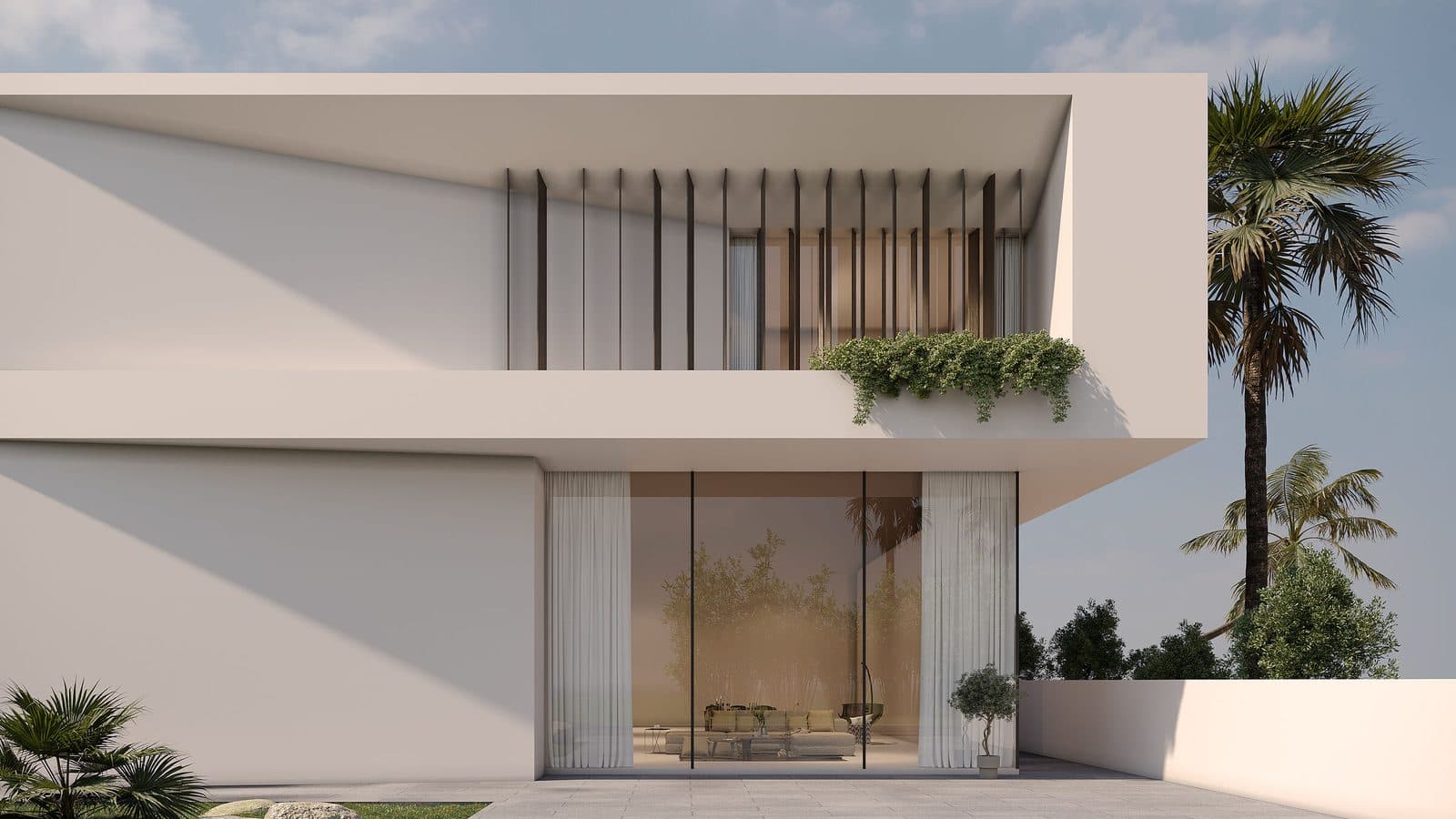
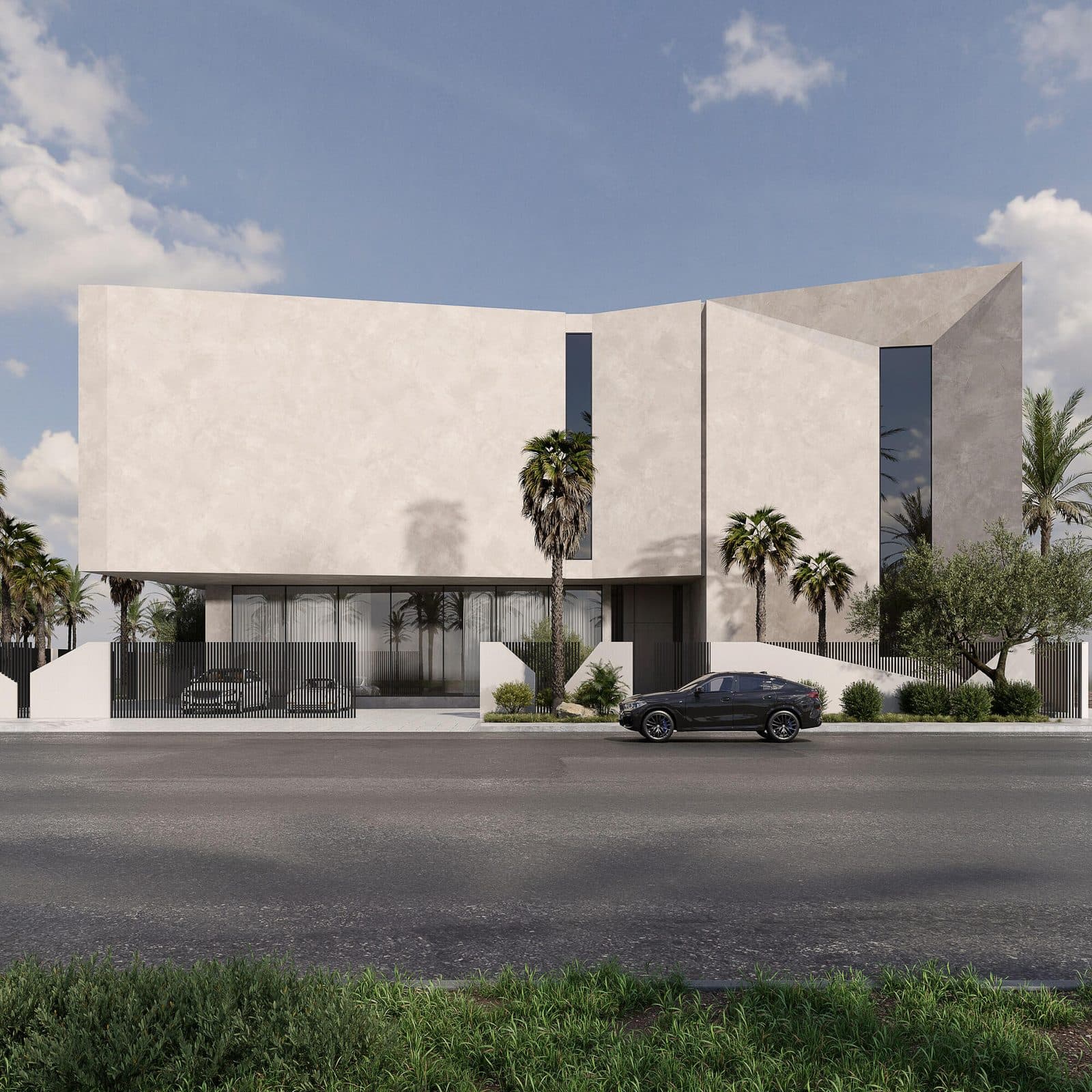
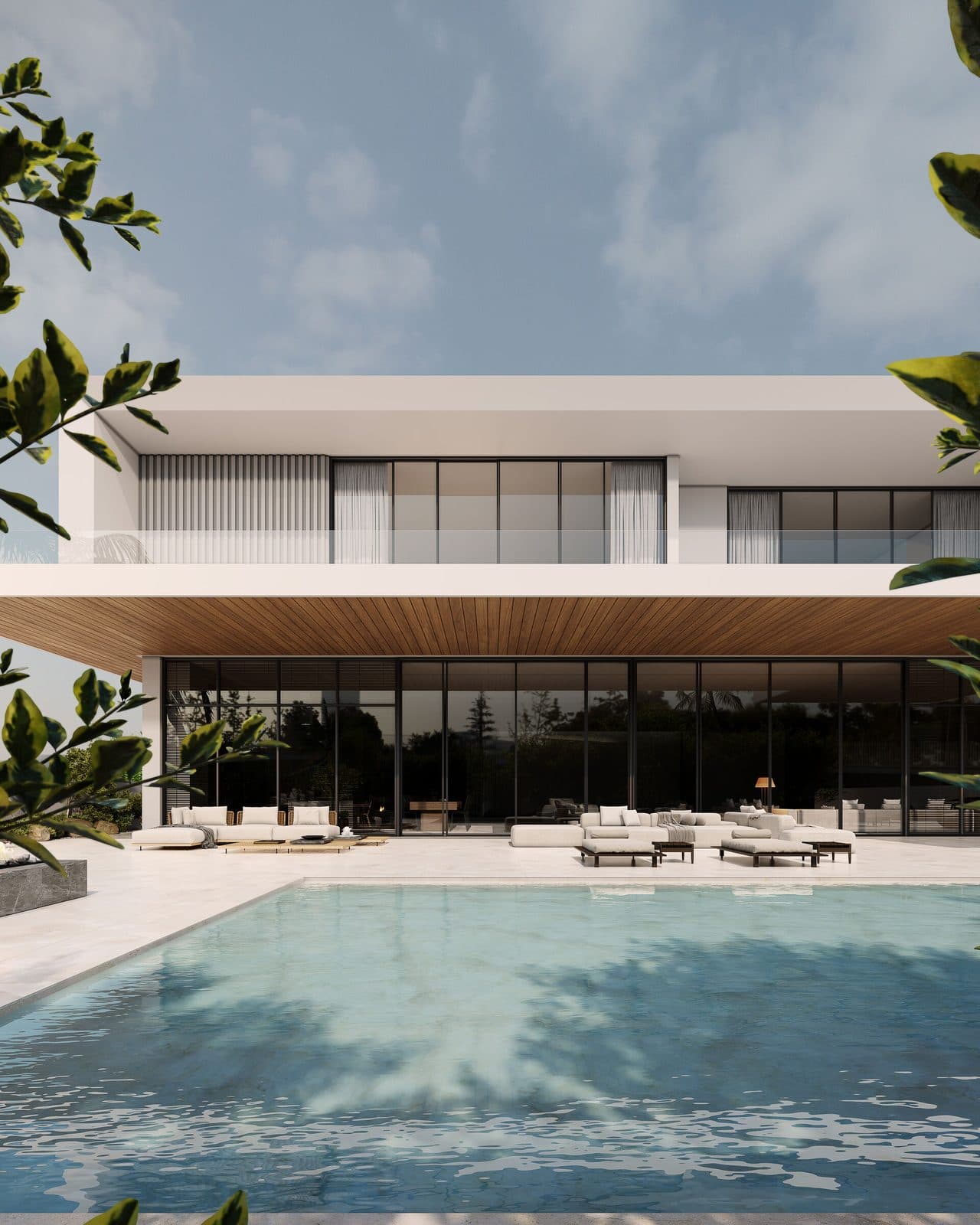
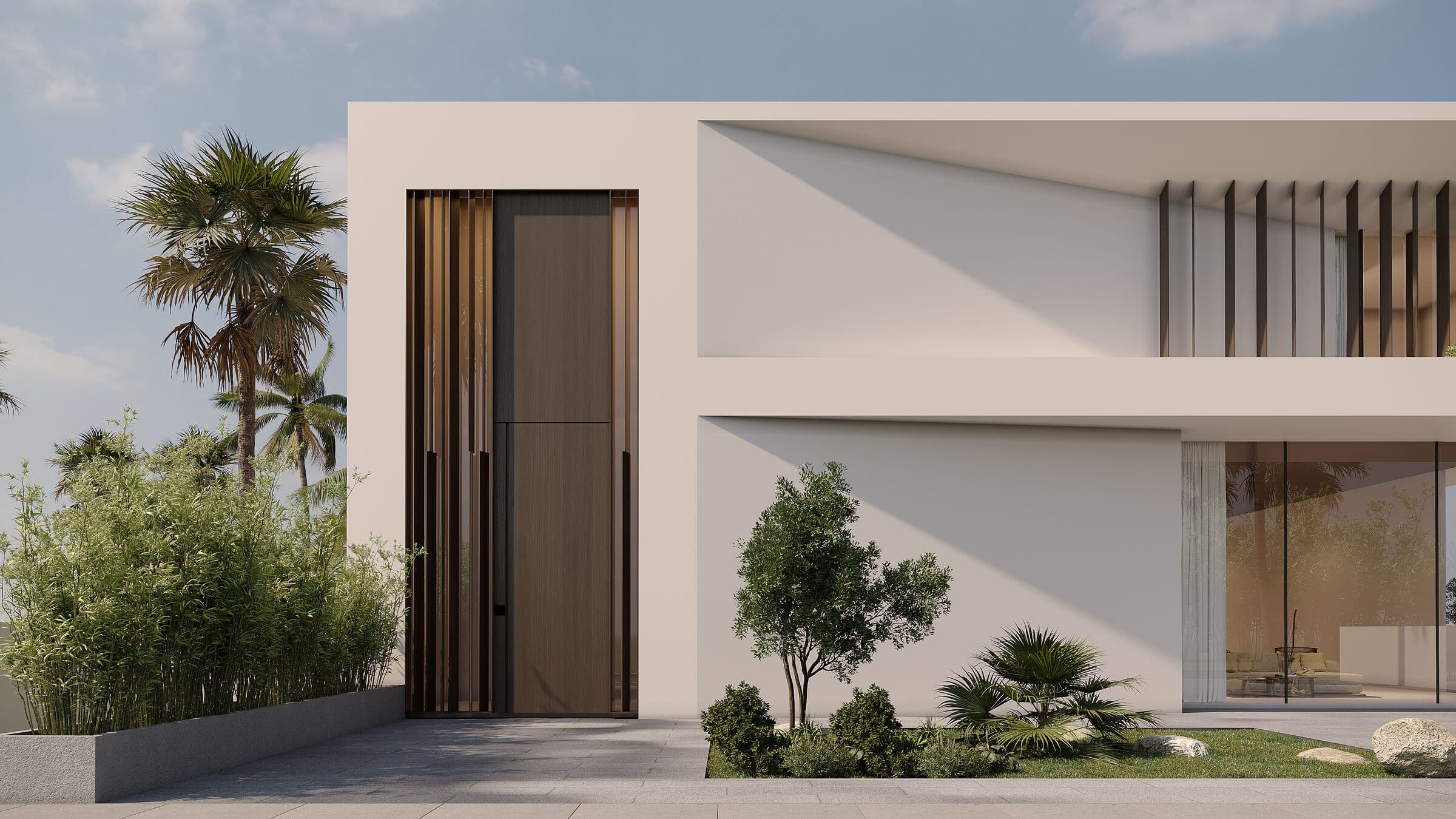
Our work on Maison Blanche demonstrates this approach. The villa's adaptive architecture was designed from the first concept to integrate intelligent systems that respond to occupancy, climate, and time of day. The technology is present in every room, but you'd never know it by looking. That's the standard we design to.
"We don't add technology to a finished design. We design the architecture and the technology together. The result is a home that's intelligent by nature, not by afterthought."
Salman Al Nasser, Principal Architect, ZNSO Architects
If you're planning a villa build or major renovation in Kuwait and want to explore what smart home integration looks like when it's done from the blueprint stage, schedule a consultation with our team. The earlier in the process, the better the outcome.
Frequently Asked Questions
What is a smart home villa?
A smart home villa integrates automated systems for lighting, climate, security, entertainment, and energy management into the architectural design from the blueprint stage. The technology enhances daily living without becoming visually dominant. In practice, this means concealed wiring, flush mounted controls, hidden speakers, and systems that respond automatically to occupancy, time of day, and environmental conditions.
How much does smart home automation cost in Kuwait?
Costs vary widely depending on the scope of automation and the size of the villa. A basic smart lighting and climate control package for a mid sized villa might start at KWD 5,000 to KWD 15,000, while a fully integrated system covering all five major systems (climate, lighting, security, entertainment, and energy monitoring) in a large villa can reach KWD 30,000 to KWD 80,000 or more. The most important cost factor is timing. Integrating during construction is 30% to 60% less expensive than retrofitting the same systems after the villa is complete.
Should I hire an architect or a smart home installer first?
Your architect should be your first call. Smart home infrastructure affects the electrical plan, structural provisions, mechanical systems, and spatial layout of the villa. These decisions need to be made during the design phase, not after construction. Your architect will coordinate with a specialized technology consultant to ensure every system is planned into the drawings before they go to the contractor.
Can smart home systems be added to an existing villa?
Yes, but with limitations and higher cost. Retrofitting requires cutting into finished walls and ceilings to run cable, converting existing spaces into equipment rooms, and working around structural and mechanical elements that weren't designed to accommodate smart systems. Some features, like motorized shade pockets or in ceiling speakers, may be impractical to retrofit without significant construction work. Wireless alternatives exist but often come with reliability and performance trade offs, especially in large villas with thick concrete walls common in Kuwait construction.
What smart home systems work best in Kuwait's climate?
Climate control automation delivers the highest return in Kuwait. Automated exterior shading, zoned HVAC management, and smart ventilation systems directly address the extreme heat (50°C+ summers) that dominates the country's climate for several months each year. Energy monitoring systems are also highly effective, as Kuwait's residential sector is the country's largest electricity consumer. Smart HVAC management and automated shading can reduce cooling costs meaningfully while improving indoor comfort.
Do smart home features require special Baladiya approval?
Smart home systems themselves don't require a separate permit category. However, the electrical plans, structural provisions, and mechanical modifications they require must be reflected in the drawings submitted to the Baladiya for building approval. If smart home infrastructure is planned during the design phase, these details are included in the original submission. Adding them after approval means plan amendments and additional review cycles, which can delay construction.
How does smart home technology reduce electricity bills in Kuwait?
Smart systems reduce electricity consumption in three primary ways. First, automated shading reduces solar heat gain, which directly lowers the cooling load on the HVAC system. Second, occupancy based climate and lighting control ensures that energy isn't wasted on unoccupied rooms. Third, real time energy monitoring makes consumption visible, helping homeowners identify and eliminate waste. Research from the Kuwait Institute for Scientific Research indicates that buildings meeting the ECCPB energy conservation code can achieve up to 31% reduction in electricity consumption.
Building the Future Today
The smartest homes in Kuwait won't be the ones with the most technology. They'll be the ones where you forget the technology is there.
That's what happens when smart home design starts on the architect's drafting table instead of in a product catalog. The systems disappear into the walls. The controls blend with the finishes. The automation responds to your life without asking for attention. And the home feels exactly as it should: calm, comfortable, and completely yours.
If you're planning a new villa or a major renovation, the single best decision you can make for your smart home is to bring your architect into the conversation before anyone else. That first conversation shapes everything that follows.
Schedule a consultation with ZNSO Architects to start designing a villa where the technology truly serves the architecture.