ZNSO Architects
Design Studio
Kuwait’s summers regularly push past 50°C. That kind of heat doesn’t just make life uncomfortable. It makes your electricity meter spin faster than you can keep up. And it makes sustainable architecture in Kuwait not just a nice idea, but a necessity.
Air conditioning accounts for 67% to 72% of residential electricity consumption in Kuwaiti villas, according to research published in MDPI Energies and Frontiers in Energy Research. The building sector alone is responsible for 70% of Kuwait’s total national energy use. And the country ranks fifth globally in per capita electricity consumption at 15.7 MWh per person per year, according to the International Energy Agency.
Those numbers tell a clear story. The way we design and build homes in Kuwait needs to change.
This guide covers how that change works in practice: the passive strategies, modern materials, building codes, and real design decisions that can cut your villa’s cooling costs by up to 62%, based on peer reviewed research. No greenwashing. No theory. Just what actually works in 50°C heat.
Why Sustainable Design Is No Longer Optional in Kuwait
For decades, cheap electricity removed any real incentive to build energy efficient homes in Kuwait. The government subsidizes 94.7% of electricity costs, bringing the consumer rate down to roughly 2 fils per kWh (about $0.007). At that price, who cares if your AC runs nonstop for six months?
But that math is changing.
Kuwait’s Vision 2035 economic plan includes a target of 15% electricity from renewable sources by 2030 and signals a broader shift toward energy accountability. Subsidy reform discussions continue across the Gulf. And regardless of what you pay per kilowatt hour, a villa consuming 60,000+ kWh annually still puts enormous strain on national infrastructure.
The Kuwait Energy Conservation Code of Practice, first established in 1983 and revised in 2010, 2014, and 2018, already sets minimum requirements for building envelope insulation, glazing specifications, and HVAC system performance in all new construction. These aren’t suggestions. They’re enforceable regulations tied to Baladiya building permits.
“Sustainable design in Kuwait isn’t about following a global trend,” says Salman Al Nasser, Principal Architect at ZNSO Architects. “It’s about responding to the reality of our climate. A home that works with Kuwait’s environment, rather than fighting against it, is more comfortable, more beautiful, and far less expensive to run.” That belief sits at the center of our design philosophy, and it shapes every project we take on.
The question isn’t whether green building in Kuwait matters. It’s whether you’ll design for it proactively or retrofit later at a higher cost.
Learning from the Past: Traditional Kuwaiti Cooling Strategies That Still Work
Before air conditioning existed, Kuwaiti families lived through the same summers we face today. Their homes weren’t just surviving the heat. They were designed specifically for it. And modern computational analysis has confirmed what generations of builders understood intuitively: these passive cooling strategies work.
The Courtyard as Climate Machine
The traditional Kuwaiti courtyard house wasn’t a decorative choice. It was thermal engineering. Shaded interior courts create a microclimate several degrees cooler than the surrounding streets. As hot air rises from the courtyard, it pulls cooler air through ground level rooms through the stack effect, creating natural ventilation without any mechanical system. Wind catchers (known locally as barjeel) amplified this process by capturing breezes above roofline height and directing them down into living spaces below.
Research published in MDPI Energies shows that courtyard configurations achieve a near optimal balance between daylighting, ventilation, and solar control in hot arid climates. The courtyard house design for Kuwait cooling is one of the most studied and validated approaches in the field.
For a deeper look at how these architectural traditions shape modern Kuwaiti homes, see our guide to contemporary Kuwaiti villa architecture.
Mashrabiya: More Than Decoration
The mashrabiya screen, with its intricate geometric patterns, is often treated as a purely aesthetic feature in modern construction. That misses the point entirely. These screens were designed to filter harsh sunlight while allowing airflow, reducing solar heat gain without blocking natural ventilation.
In sustainable villa design, the mashrabiya works as a passive cooling device. Modern versions use the same principles with updated materials, controlling glare and heat while letting diffused natural light inside.
Thermal Mass and the Wisdom of Heavy Walls
Traditional Kuwaiti buildings used thick walls made of coral stone, mud brick, and gypsum plaster. These heavy walls absorb heat slowly during the day and release it slowly at night, smoothing out temperature swings and keeping interior spaces cooler during peak afternoon hours.
This principle, known as thermal mass, remains one of the most effective passive cooling strategies for Kuwait’s climate. It’s not glamorous. But it works.
Modern Materials and Technologies for Kuwait’s Climate
Traditional strategies set the foundation. Modern materials take performance much further. Here’s what matters most when choosing the best building materials for a hot climate like Kuwait’s.
The Building Envelope: Your First Line of Defense
Your building envelope (walls, roof, windows, and foundation) is the single most important factor in controlling how much heat enters your home. Getting this right matters more than any HVAC upgrade.
Kuwait’s Energy Conservation Code sets specific thermal performance requirements. Walls must achieve a U value of 0.42 W/m²K or better, while roofs must reach 0.20 W/m²K, according to a GCC building code comparison by WIT Press. Meeting these targets requires proper thermal insulation in Kuwait, and going beyond them is where the real savings start.
The most common insulation options for Kuwaiti construction include expanded polystyrene (EPS), extruded polystyrene (XPS), and polyurethane foam. Each has trade offs in cost, moisture resistance, and thermal performance. Insulated concrete forms (ICF) are gaining popularity for new builds because they combine structural integrity with continuous insulation in a single system.
Glass and Glazing: Keeping Light In, Heat Out
Windows are where most homes lose the battle against heat. Standard single pane glass lets solar radiation pour in, forcing your AC to work overtime.
Double glazed windows with low emissivity (Low E) coatings make a measurable difference. The key specification to watch is the Solar Heat Gain Coefficient (SHGC), which measures how much solar radiation passes through the glass. For Kuwait, you want an SHGC below 0.25 on south and west facing facades.
Triple glazing is available but often unnecessary in Kuwait. The cost benefit ratio favors high quality double glazing with proper Low E coatings and argon gas fills for most residential projects.
Cool Roofs and Reflective Surfaces
Your roof absorbs more solar radiation than any other part of your home. In Kuwait’s direct sun, a standard dark roof can reach surface temperatures above 80°C.
Reflective roof coatings bounce solar energy back instead of absorbing it, reducing the heat load on your cooling system. White or light colored roofing membranes, reflective tiles, and specialized cool roof coatings can lower roof surface temperatures by 30°C or more. This is one of the simplest and most cost effective upgrades for any Kuwaiti villa.
Smart HVAC Systems That Work With Your Design
Even the best passive design needs mechanical cooling in a Kuwait summer. The goal isn’t to eliminate AC. It’s to reduce the load your HVAC system has to handle.
Studies on Kuwaiti residential buildings show that improving HVAC system efficiency alone can reduce annual electricity consumption by up to 41%, according to research by Ameer and Krarti. A combined approach to envelope and systems improvement can achieve savings of 38% to 62%.
Smart HVAC zoning, which cools occupied rooms while reducing output in empty spaces, is one of the most practical upgrades for Kuwaiti villas. Most families with an average of seven occupants don’t use every room at the same time, yet conventional systems cool the entire home uniformly. That’s wasted energy.
Automated energy monitoring systems also help. When homeowners can see exactly where their electricity goes, they make smarter choices. Even raising your thermostat by 2°C (from 21°C to 23°C) can reduce cooling energy consumption by more than 10%.
Designing for Kuwait: Passive Strategies That Cut Cooling Costs
Good sustainable design reduces your reliance on mechanical systems before they ever turn on. These passive cooling strategies are specific to Kuwait’s climate and conditions.
Solar Orientation and Building Placement
How you position your home on its plot affects how much heat it absorbs. In Kuwait, minimizing east and west facing wall exposure is the priority, since these facades receive the most intense afternoon sun. The longest walls should face north and south, where solar angles are easier to control with overhangs and shading devices.
This sounds basic, but it’s surprisingly overlooked. Many Kuwaiti villas are oriented based on plot shape and street access without any consideration for solar exposure. Getting orientation right from the start costs nothing and saves energy for the life of the building.
Shading Strategies That Actually Work
External shading is far more effective than internal blinds or curtains. Once sunlight passes through your glass, that heat is already inside your home. The goal is to block it before it reaches the window.
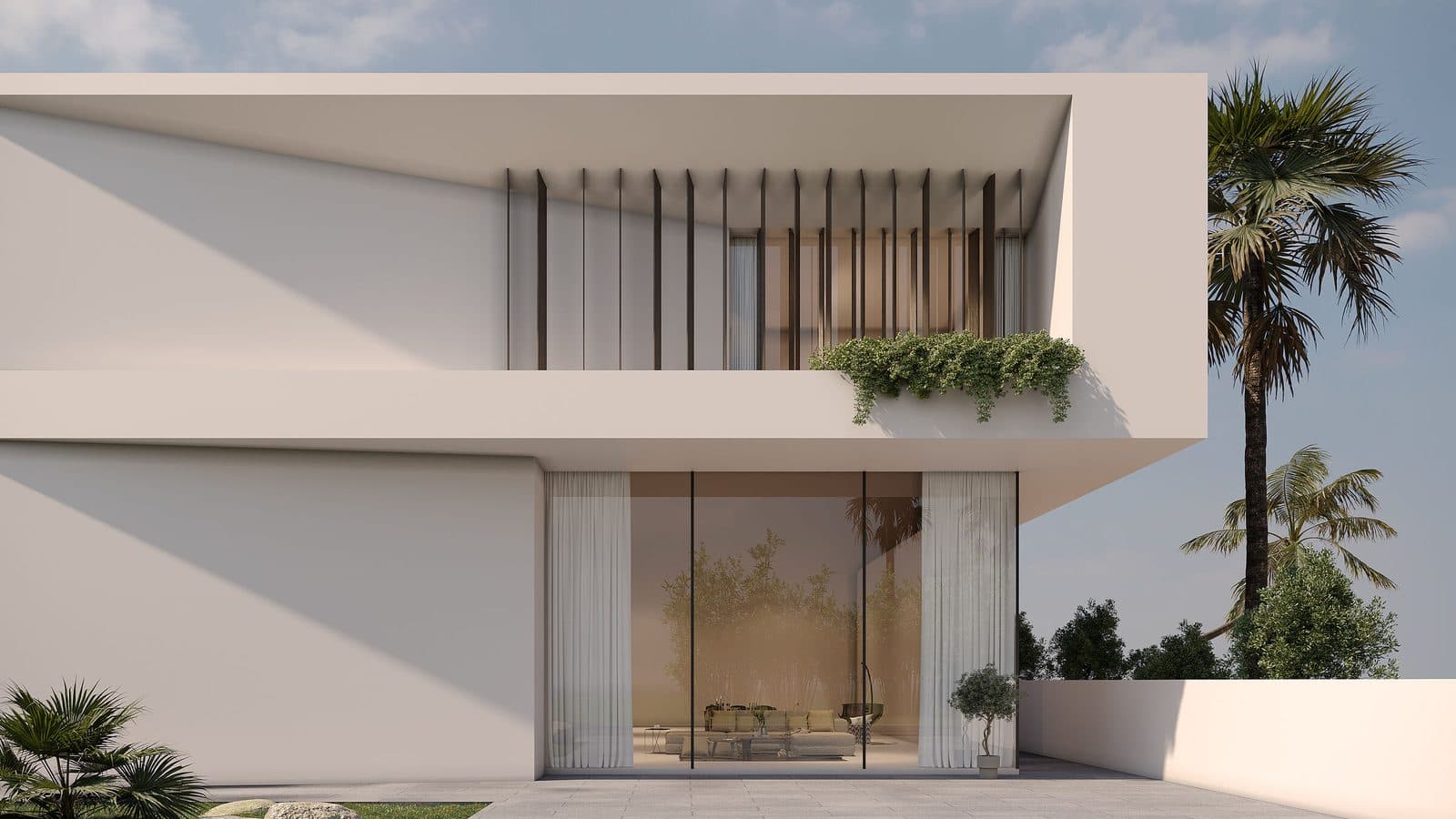
Deep overhangs on south facing facades, vertical fins on east and west exposures, and pergola structures with climbing plants all work well in Kuwait. Automated external blinds that adjust based on sun position take this a step further, especially for larger glass surfaces.
Ventilated facades, where an outer skin is separated from the inner wall by an air gap, are increasingly popular in energy efficient home design in Kuwait. The air gap allows heat to dissipate through convection rather than conducting into the building.
Cross Ventilation and Night Cooling
Kuwait’s winters (November through March) are mild and pleasant, with temperatures regularly dropping into the teens. This is a design opportunity that most homes ignore entirely.
Windows and openings placed to encourage cross ventilation can eliminate the need for AC during five or more months of the year. Night cooling, where cooler evening air is used to flush heat from thermal mass walls and floors, extends comfortable conditions even further into the shoulder seasons.
The challenge is designing a home that can transition between sealed, air conditioned mode in summer and naturally ventilated mode in winter. It requires thoughtful window placement, operable shading, and a layout that supports airflow. But the payoff is significant.
Landscape Design for Thermal Comfort
What surrounds your villa matters as much as what’s inside it. Hard surfaces like concrete driveways and boundary walls absorb and radiate heat, creating a “heat island” effect that raises temperatures around your home.
Strategic landscaping can reduce this effect substantially. Shade trees on the west side of your property block late afternoon sun. Ground cover and gravel beds stay cooler than concrete. Xeriscaping with native, drought resistant plants reduces water consumption while softening the environment around your home. Greywater recycling systems can keep these landscapes irrigated without adding to your municipal water bill.
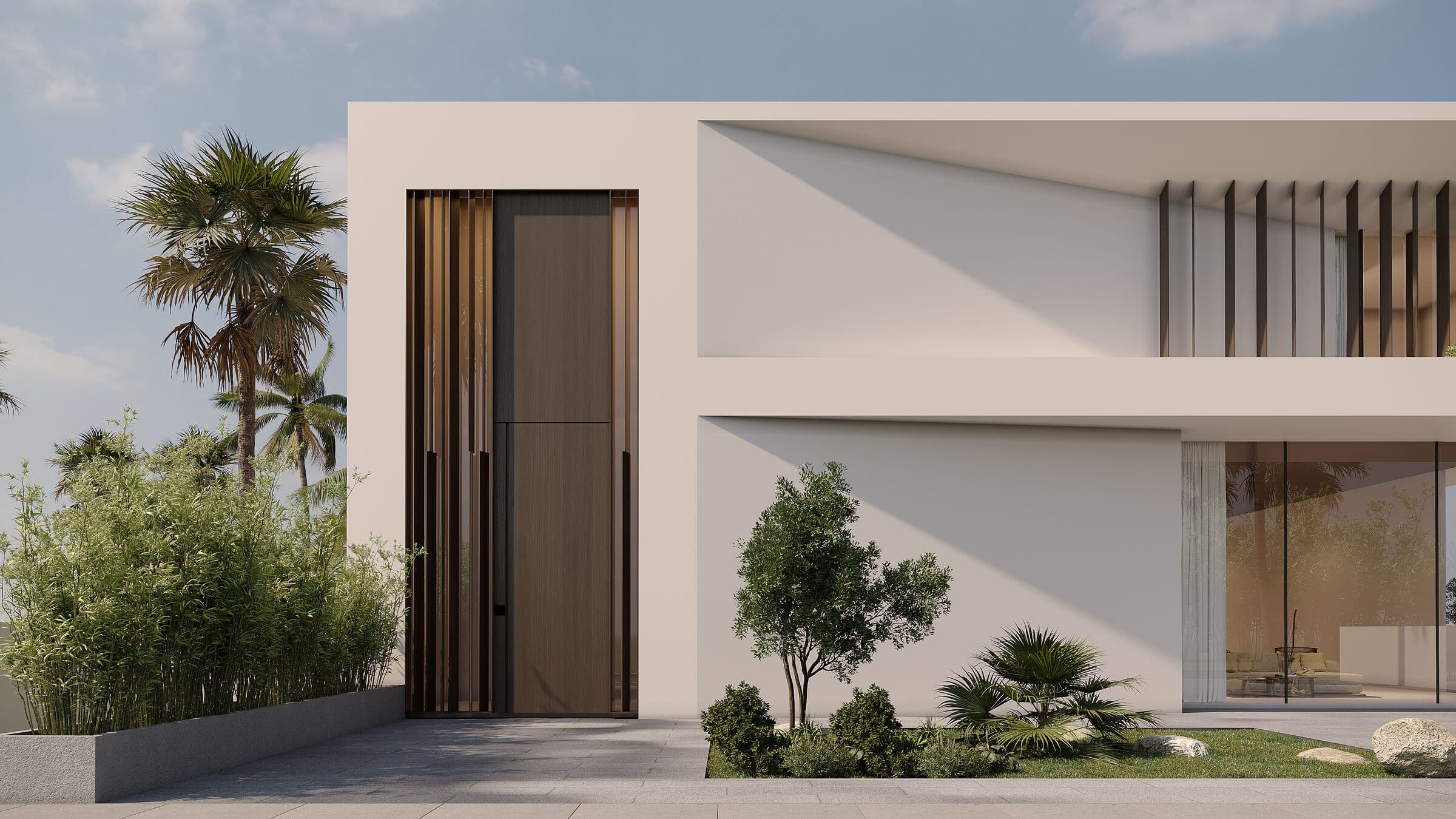
ZNSO’s landscape integrated design approach, demonstrated in projects like the Dana Residence, treats the outdoor environment as an active part of the thermal comfort strategy, not just decoration.
Solar Energy for Kuwaiti Villas: What’s Practical Today
Kuwait has some of the highest solar irradiance levels on earth. So why aren’t more villas running on solar power?
The answer is a mix of regulation, economics, and practical challenges.
Kuwait has set a national target to generate 15% of its electricity from renewable sources by 2030, with solar capacity projected to reach 2.9 GW by the end of the decade, up from approximately 50 MW today, according to Rystad Energy data reported by pv magazine.
On the residential side, the KFAS and ABB pilot program equipped 150 Kuwaiti villas with solar systems ranging from 3.6 to 12.5 kW, demonstrating that residential solar panels in Kuwait are technically viable. The results were promising, though net metering policies (allowing homeowners to sell excess power back to the grid) remain limited.
Practical considerations matter too. Dust and sand accumulation can reduce panel efficiency by 30% to 40% without regular cleaning. Roof structural capacity, available surface area, and inverter placement all need planning during the design phase, not as afterthoughts.
Is residential solar in Kuwait worth it today? For new builds where the infrastructure can be designed in from the start, yes. For existing villas, the calculation depends on roof condition, orientation, and access to maintenance. Either way, designing a new villa as “solar ready” (with proper roof structure, conduit runs, and electrical panel capacity) costs very little and protects your investment for the future.
What Sustainable Design Looks Like in Practice
Here’s where the conversation often goes wrong. Many homeowners in Kuwait hear “sustainable” and picture bland, boxy buildings that sacrifice beauty for performance. That’s a false choice.
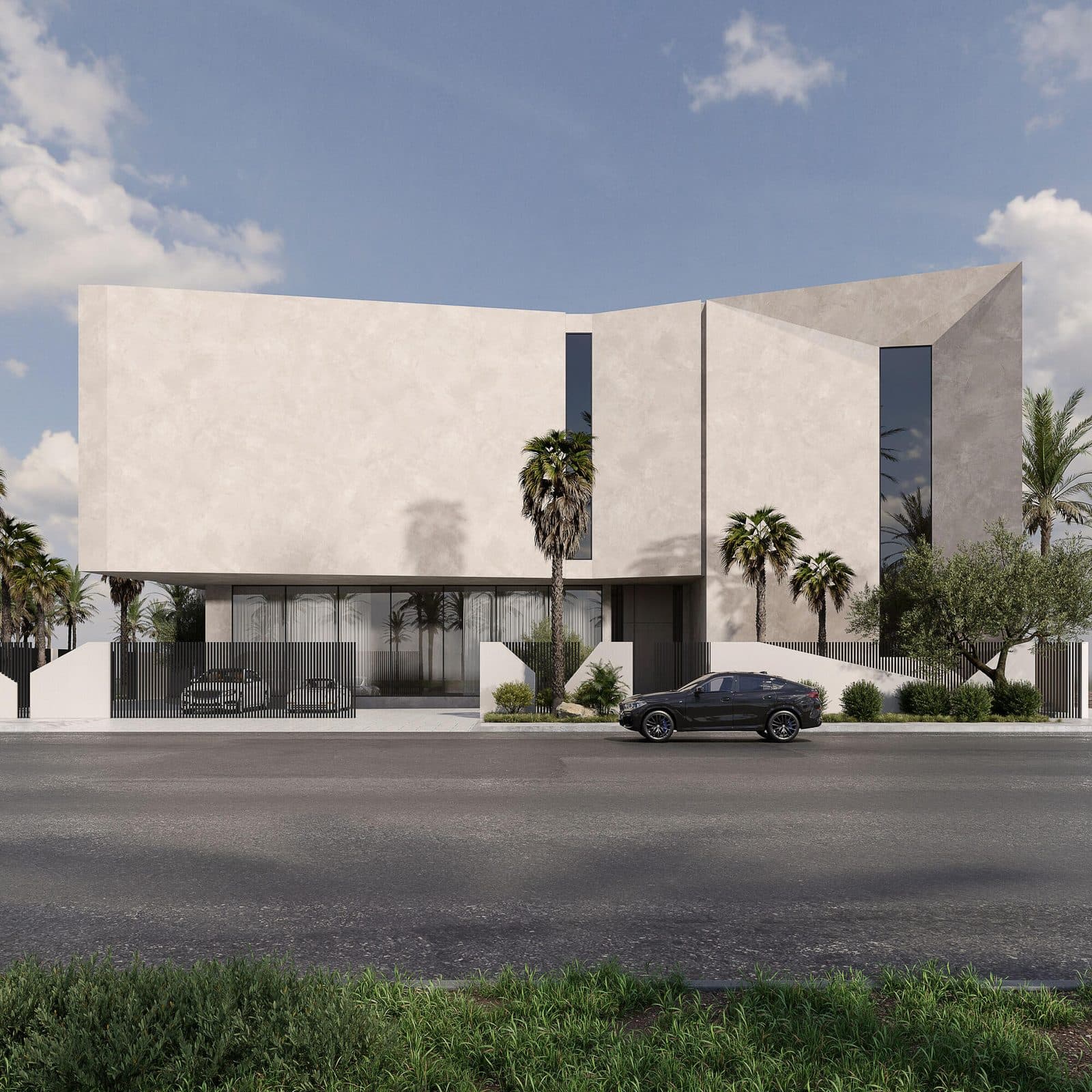
The best sustainable villas in Kuwait look exactly like what they are: carefully designed, thoughtfully detailed homes that happen to perform exceptionally well. ZNSO’s approach to adaptive architecture, like the Maison Blanche project, shows how design can respond to Kuwait’s climate without compromising on aesthetics. As Salman Al Nasser describes it, the building acts as “a monolith by day, a luminous lantern by night,” adapting its character to changing conditions.
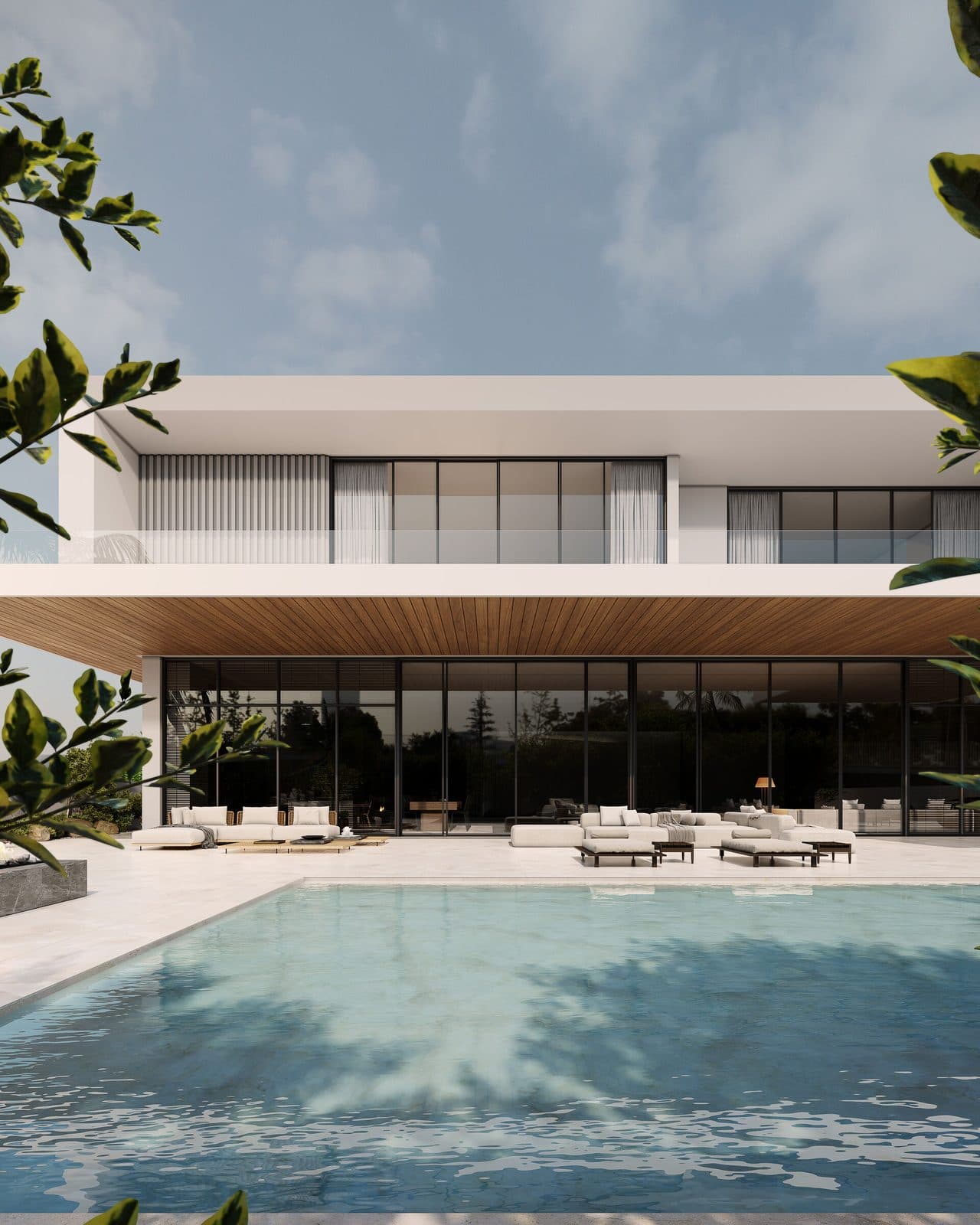
This aligns with one of 2026’s strongest architecture trends: warm minimalism. Dezeen’s 2026 forecast highlights a shift toward intelligent restraint, where every design decision serves a purpose and nothing is added purely for show. In Kuwait’s context, that means choosing natural stone and lime plaster for their thermal properties and their beauty. It means designing shaded courtyards that cool your home while creating a private retreat. It means biophilic design that connects interior spaces to nature through functional gardens, water features for evaporative cooling, and generous indoor outdoor transitions designed for Kuwait’s comfortable winter months.
Sustainability and luxury aren’t opposed. They’re the same thing, done well.
Good sustainable design also improves indoor air quality, something most homeowners don’t think about until they notice the difference. Low VOC finishes, proper mechanical ventilation with heat recovery, and natural materials all contribute to healthier interiors. And as circular materials become more available in Kuwait’s construction market (recycled aggregates, reclaimed stone, durability first design thinking), the environmental footprint of new builds will continue to shrink.
Kuwait’s House 2035 prototype, developed by NTEC and PAHW, proved this at the national level by achieving a 58% energy reduction compared to conventional construction while delivering a comfortable, modern living space. The technology exists. The materials are available. What’s needed is the design thinking to bring them together.
Frequently Asked Questions
How much can sustainable design reduce my electricity bill in Kuwait?
Studies on Kuwaiti residential buildings show that a combined approach to building envelope improvement, HVAC efficiency, and passive design can reduce electricity consumption by 38% to 62%. Even simple steps like better insulation and double glazed Low E windows can achieve reductions of 20% to 30%. Because Kuwait’s government subsidizes 94.7% of electricity costs, the monetary savings may seem modest at current rates. But the comfort improvement is immediate, and future subsidy changes would make efficient homes much cheaper to run.
Does Kuwait have green building codes?
Yes. The Kuwait Energy Conservation Code of Practice (known as R 6) was first established in 1983 and has been revised in 2010, 2014, and 2018 by the Kuwait Institute for Scientific Research (KISR). It sets minimum requirements for wall insulation (U value of 0.42 W/m²K), roof insulation (U value of 0.20 W/m²K), glazing specifications, and HVAC system performance. Compliance is mandatory for all new construction and is enforced through the Baladiya building permit process. A separate Kuwait Green Building Code provides additional guidelines that go beyond minimum energy performance.
What are the best insulation materials for Kuwait’s climate?
The most common options are expanded polystyrene (EPS), extruded polystyrene (XPS), and spray applied polyurethane foam. EPS is the most affordable and widely available. XPS offers better moisture resistance for below grade applications. Polyurethane provides the highest thermal resistance per centimeter, making it ideal where wall depth is limited. Insulated concrete forms (ICF) combine insulation and structure in one system and are growing in popularity for Kuwait villa construction.
Can I add solar panels to an existing villa in Kuwait?
You can, but several factors affect whether it makes sense. Your roof needs enough structural capacity, adequate unshaded south facing surface area, and proper orientation. Dust and sand require regular cleaning (at least biweekly in summer) to maintain efficiency. Net metering policies in Kuwait are still limited, which affects the economics of exporting excess power. For new builds, the better approach is designing the home “solar ready” with the right roof structure, electrical capacity, and conduit runs already in place.
How do I start planning a sustainable villa project?
Start with your architect, not your contractor. Sustainable design decisions, like building orientation, window placement, wall assembly, and shading strategy, need to happen at the earliest design stage. Once foundations are poured, your most powerful options are already gone. Look for a firm that understands Kuwait’s specific climate challenges, local building codes, and the relationship between passive design and active systems. Schedule a design consultation to discuss your project goals, site conditions, and how to build a home that works with Kuwait’s environment rather than against it.
Your Next Step: Designing a Home That Works With Kuwait’s Climate
Kuwait’s extreme heat isn’t going away. But the way we respond to it through architecture can make the difference between a villa that fights the climate every day and one that works with it.
The principles in this guide, from traditional courtyard cooling and mashrabiya ventilation to modern insulation, smart glazing, and solar readiness, aren’t theoretical. They’re proven strategies backed by research, validated by Kuwait’s own building codes, and demonstrated in real projects.
Every design decision you make today will affect your home’s comfort and energy performance for decades. The same climate considerations that drive your building envelope decisions also shape interior material choices for Kuwait villas, from flooring that stays cool underfoot to fabrics that resist UV fading. Getting those decisions right starts with choosing the right architectural design services and asking the right questions from day one.
Ready to design a villa built for Kuwait’s climate? Get in touch with ZNSO Architects to start the conversation.