ZNSO Architects
Design Studio
At 2:00 PM in July, a south facing wall in Kuwait City can reach surface temperatures above 70°C. The material behind that wall, its density, its reflectivity, its ability to slow the transfer of heat inward, determines whether the rooms behind it stay comfortable or become unbearable. This is the invisible discipline of modern facade design in Kuwait, and it is one of the most technically demanding aspects of residential architecture anywhere on Earth.
For homeowners building luxury villas in Kuwait, the facade is not a finishing touch. It is the building's first line of defense and, when designed well, its most expressive feature. The question isn't whether to invest in facade design. The question is whether the architect you choose understands what Kuwait's climate actually demands.

The Climate That Shapes Every Wall
Kuwait's environment tests buildings in ways that most of the world never experiences. Summer air temperatures routinely reach 45 to 51°C, with the Mitribah weather station regularly recording some of the highest readings on Earth. In July 2024, Kuwait logged 51°C, close to the country's all time record of 53.5°C. These aren't rare spikes. They're the baseline for four to five months of the year.
Heat is only part of the challenge. The northwesterly shamal winds carry sand and dust from Iraq and Saudi Arabia, producing an average of 20 dust storm days per year. Broader dusty conditions affect Kuwait roughly 255 days annually, according to research published by the Kuwait Institute for Scientific Research. Every grain of sand that strikes a facade surface acts as an abrasive. Over years, poorly chosen materials degrade, pit, and lose their protective properties.
Then there's humidity. Kuwait City sits on the Gulf coast, where coastal moisture pushes relative humidity well above 80% on many summer nights. This combination of extreme heat, abrasive dust, and salt laden humidity creates one of the harshest environments for building envelopes worldwide. Climate responsive architecture in this context isn't a trend or a marketing term. It's a structural necessity.
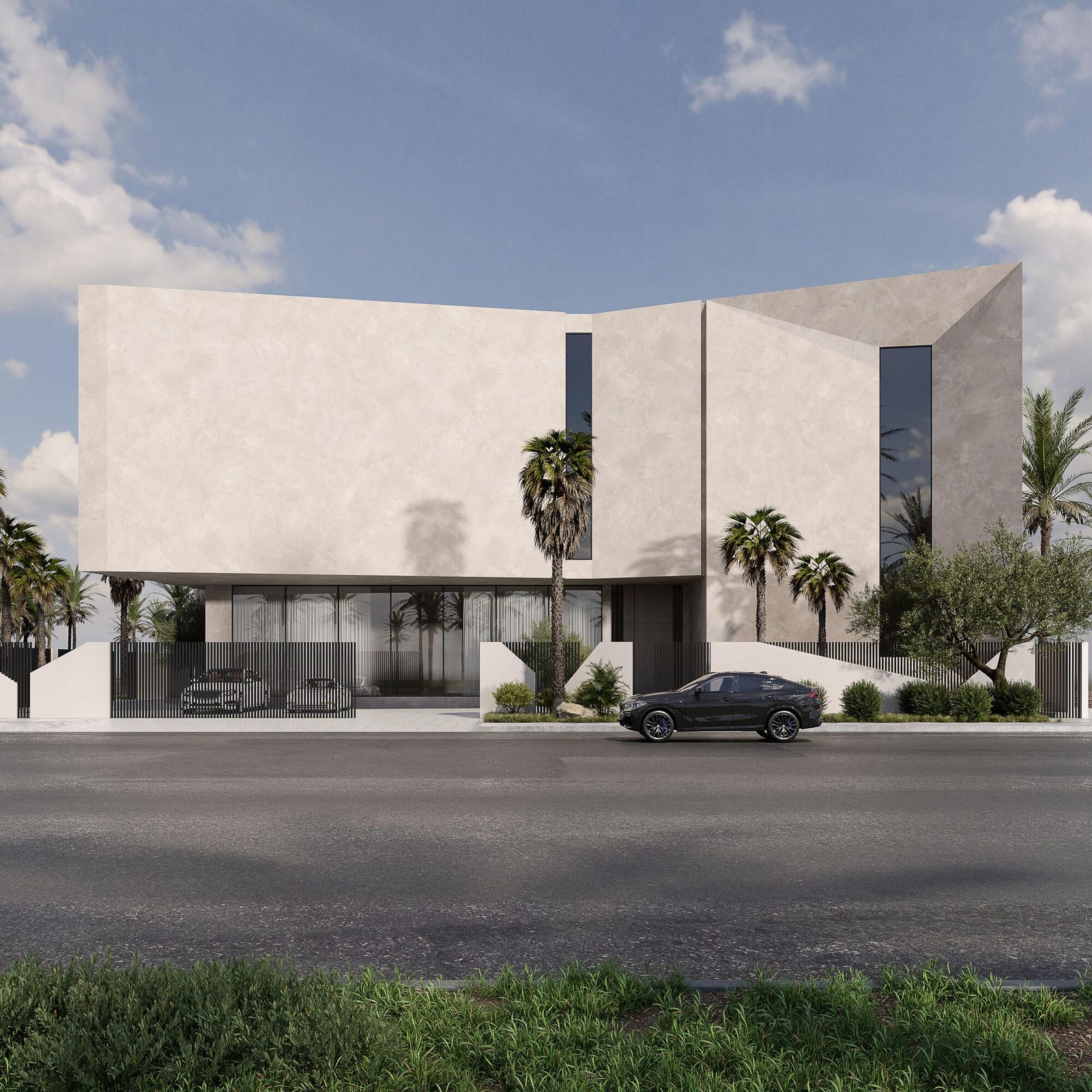
Modern Facade Design Materials for Kuwait's Extreme Heat
Choosing facade materials for hot climates requires balancing several competing demands. The material must resist UV degradation over decades of intense sun exposure. It must tolerate sand abrasion without losing its surface integrity. It must contribute to thermal performance, either by reflecting solar radiation or by providing enough mass to delay heat transfer into the interior. And it still needs to look good.
Stone cladding remains one of the most reliable choices for Gulf residential facades. Natural limestone and granite offer high thermal mass, meaning they absorb heat slowly and release it slowly, buffering the interior from rapid temperature swings. Research published in the journal Energy and Buildings found that stone cladding systems can reduce cooling loads by approximately 4% compared to aluminum composite panels, a margin that compounds across an entire villa over decades of operation.
Glass reinforced concrete (GRC) has become popular in contemporary residential facade design across the Gulf for a different reason: versatility. GRC panels are up to 80% lighter than traditional precast concrete while offering strong UV and weather resistance. This makes them especially useful for complex geometric forms and deep facade profiles that would be structurally difficult in heavier materials.
Low emissivity glazing controls the equation from the other side, letting visible light through while rejecting infrared heat. For a luxury villa, the right combination of mass (stone or GRC for opaque walls) and selectivity (coated glass for openings) creates a facade that performs thermally while expressing the architect's design intent.
Here's how the three primary facade material categories compare for Kuwait's residential context:
| Material | Thermal Mass | Weight | UV/Sand Resistance | Best Use Case |
|---|---|---|---|---|
| Stone cladding (limestone, granite) | High | Heavy | Excellent | Primary wall surfaces where thermal buffering matters most |
| Glass reinforced concrete (GRC) | Medium | Up to 80% lighter than precast | Strong | Complex geometric forms, deep profiles, decorative screens |
| Low emissivity glazing | Low (transmits selectively) | Light | Moderate (coated surface) | Window and opening areas where controlled daylight is needed |
Each material solves a different problem. The best facades in Kuwait's climate responsive architecture combine all three, using the right material in the right place based on orientation, sun exposure, and the homeowner's design goals.
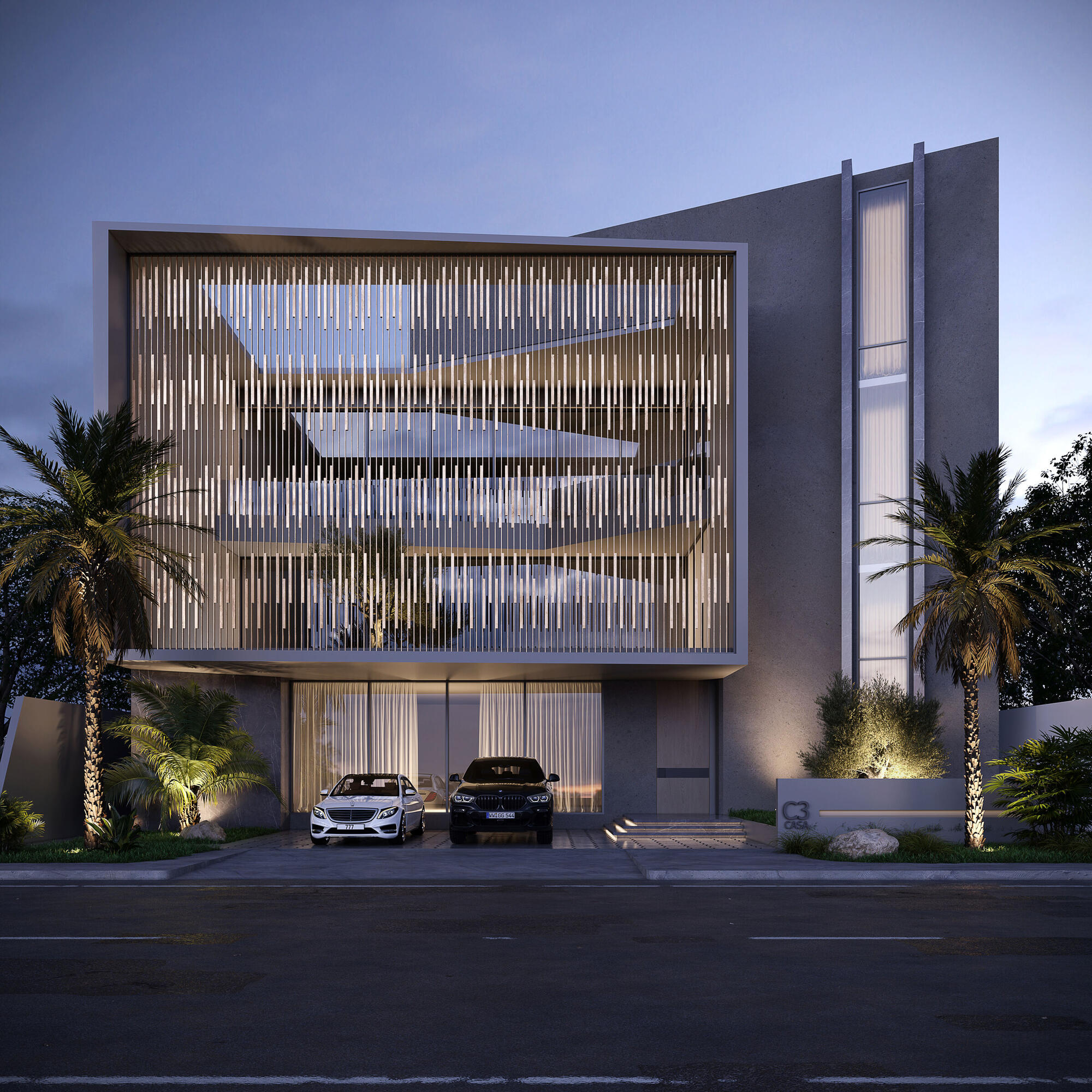
Light as a Design Material
Material selection, however, addresses only half the problem. The geometry of the facade, its depth, its angles, its relationship to the sun's seasonal path, determines how light enters a building and where shadow falls. In Kuwait, where the sun reaches near vertical angles in summer, even modest overhangs and recesses can block significant solar radiation from hitting glass surfaces directly.
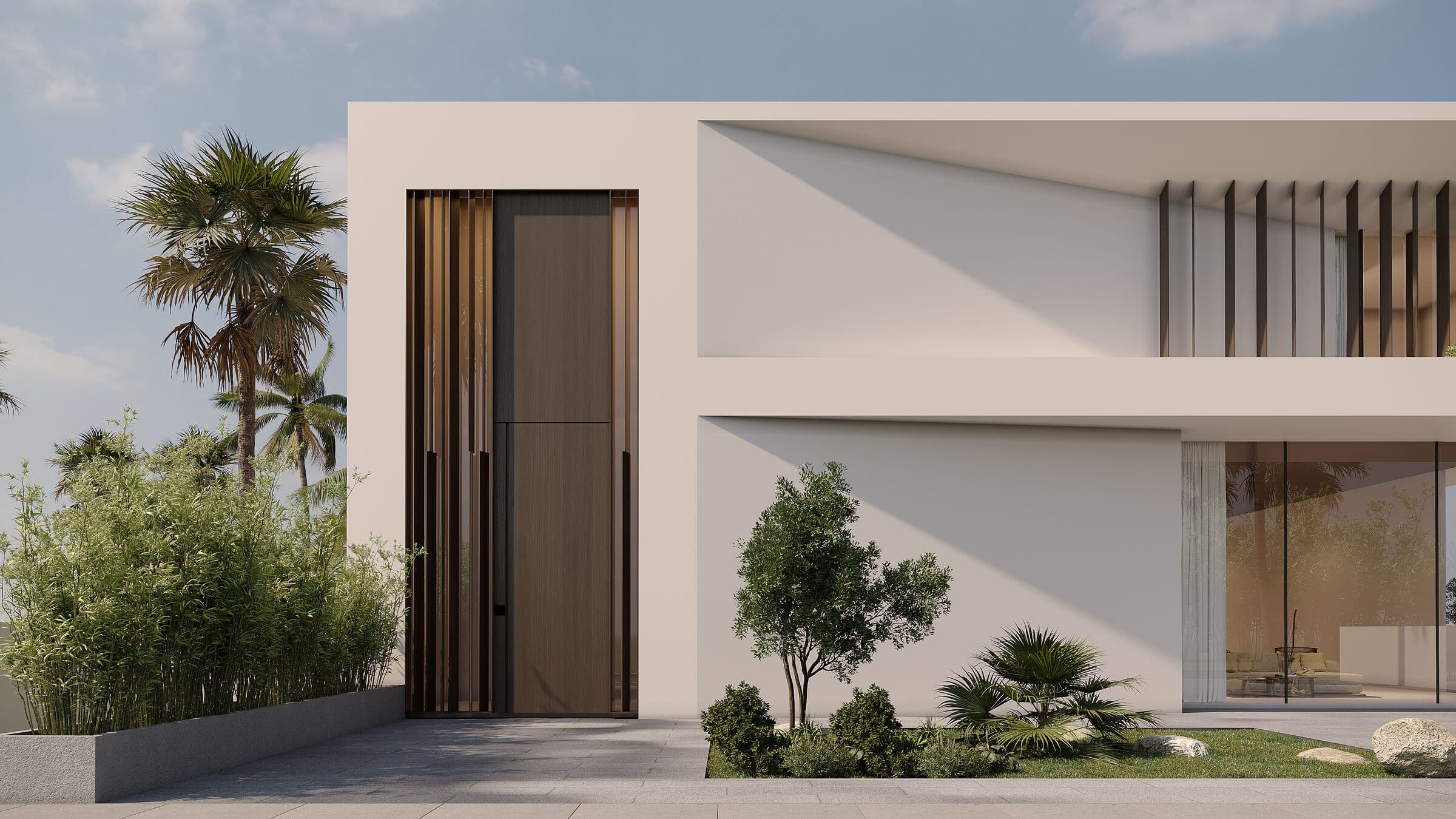
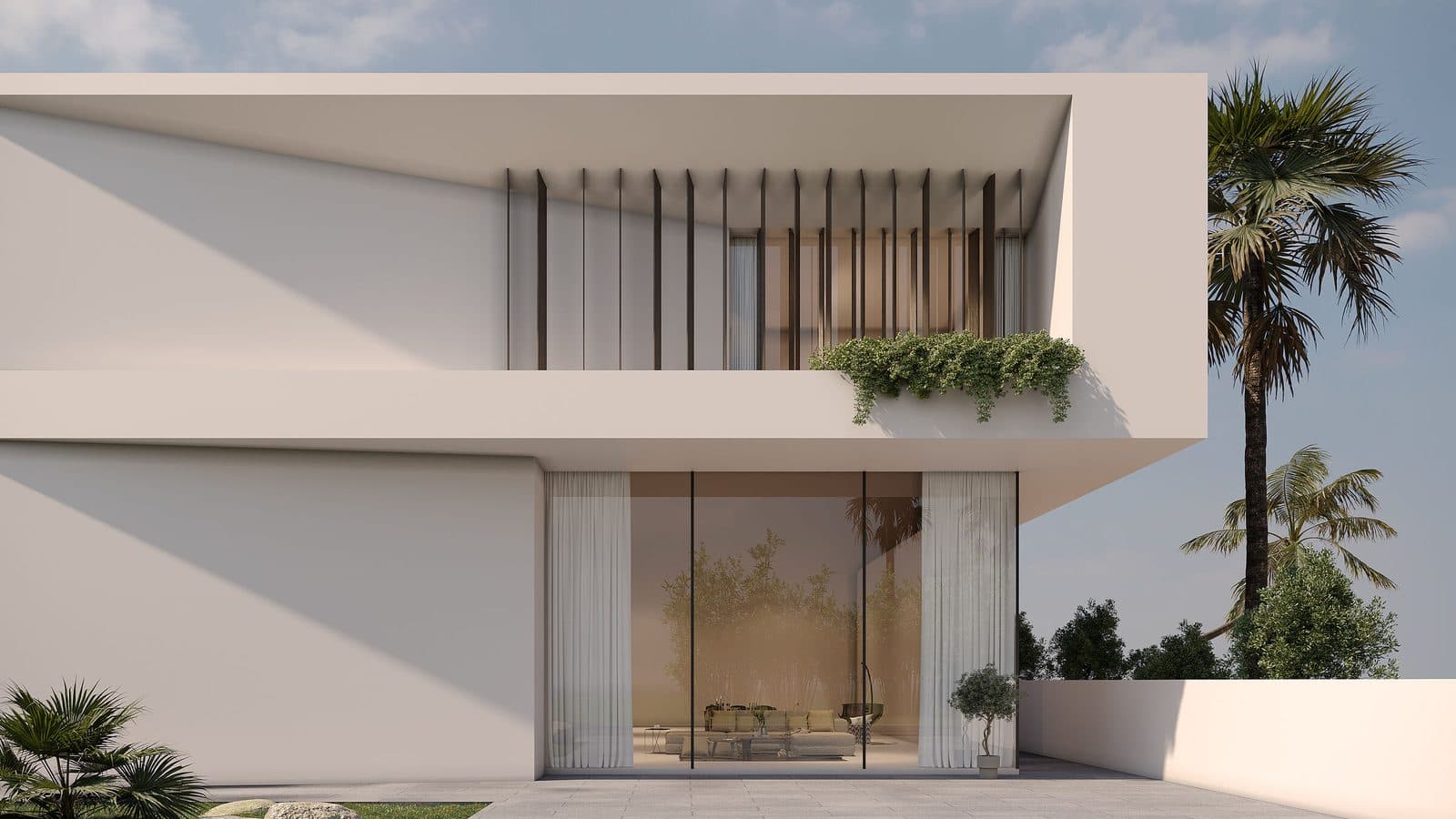
This is where facade design moves from engineering into architecture. A deep set window creates a pocket of shadow that reduces cooling load and, at the same time, produces the visual depth and contrast that give a building its character. Angled fins, perforated screens, and layered facade planes can filter light into patterns that change throughout the day, connecting the interior to the movement of the sun without exposing it to the full force of solar heat.
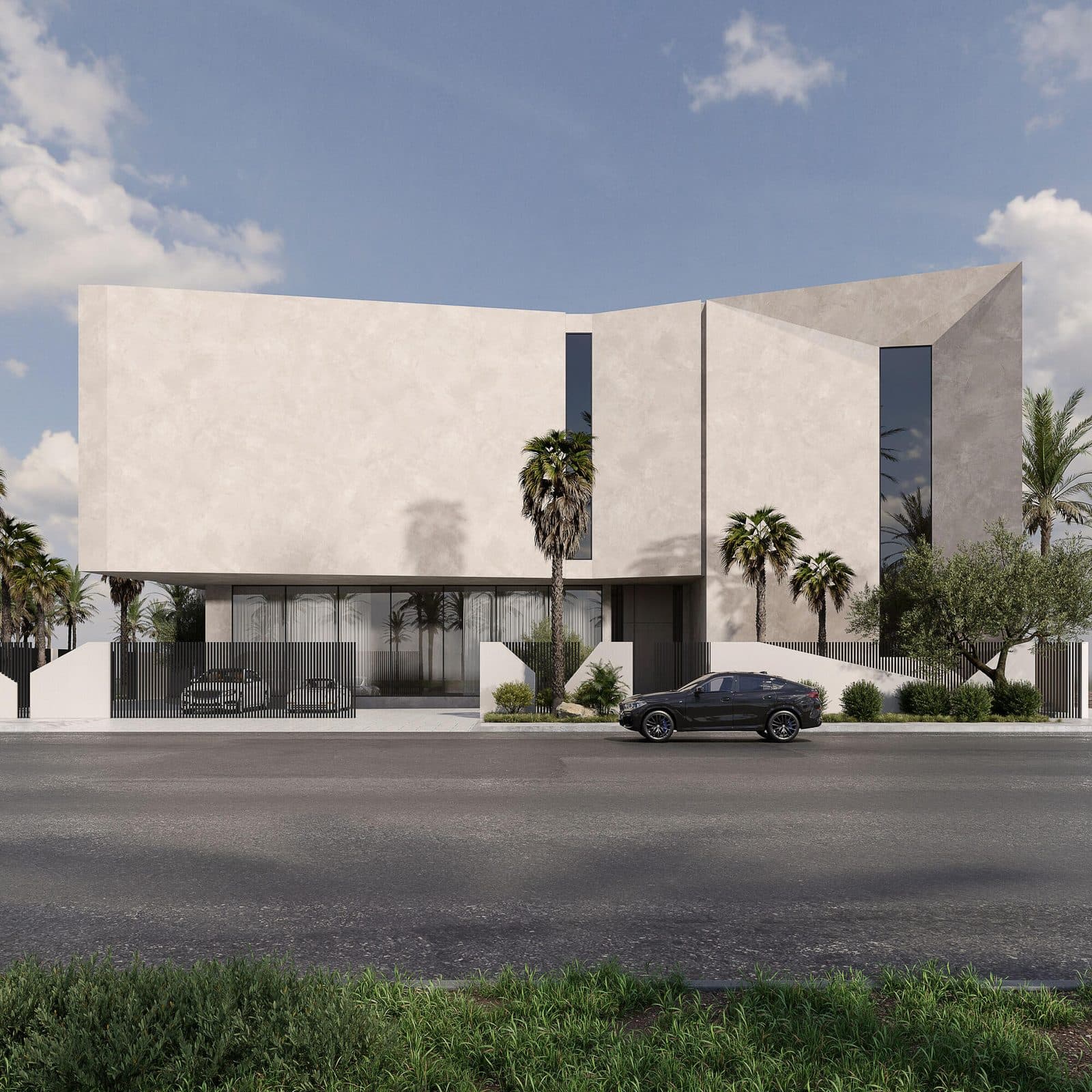
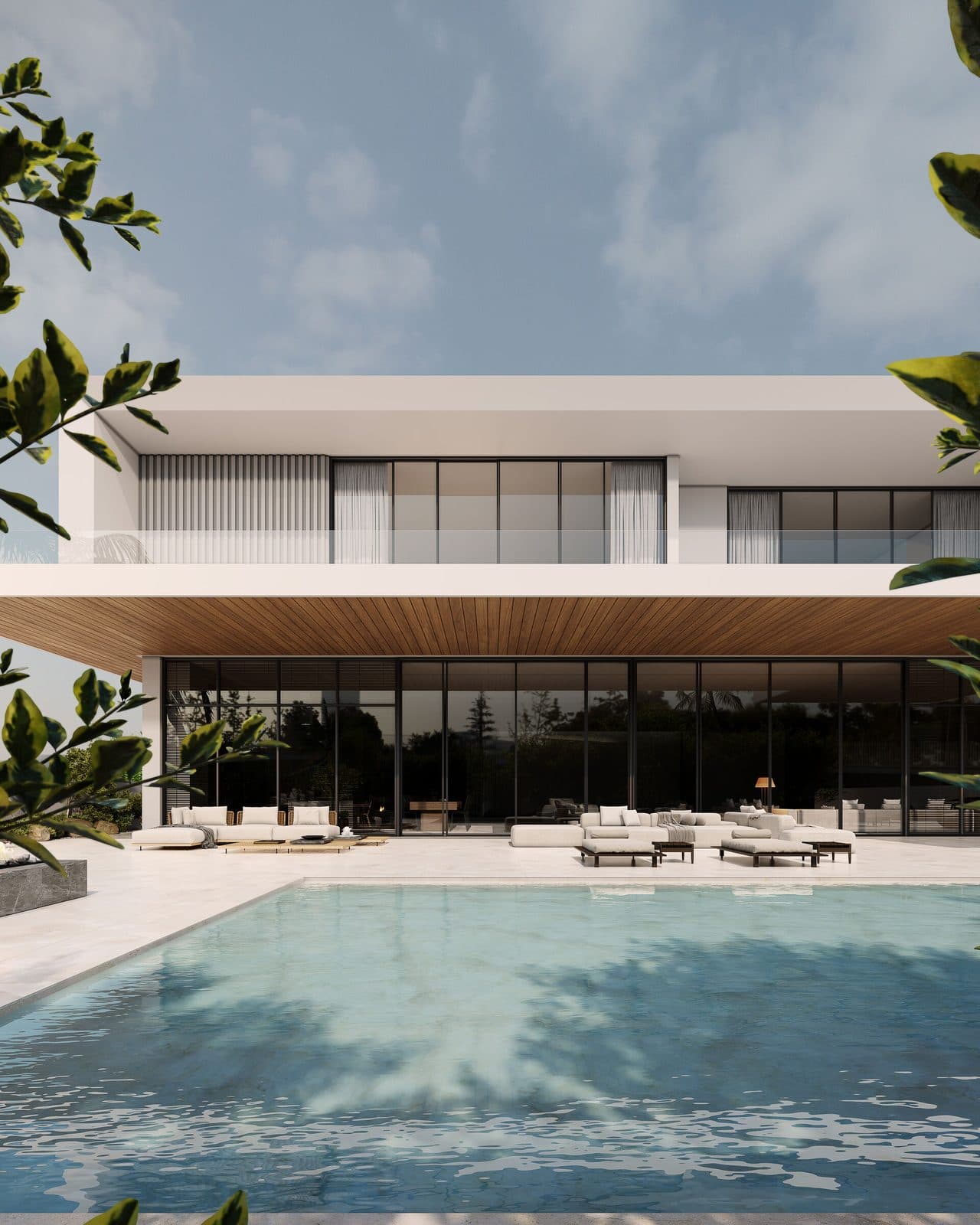
ZNSO Architects' Maison Blanche project, a 375 m² villa in Kuwait City completed in 2024, illustrates this principle. The facade was conceived as a dual state surface: a restrained monolith under direct sun, where clean lines and solid materiality absorb and redirect light, and a luminous volume after dark, where carefully placed lighting reveals the building's depth and geometry. The same facade reads two entirely different ways depending on the time of day. Explore more of the studio's residential work in the ZNSO portfolio.
That kind of adaptive facade architecture, common in the best Middle Eastern residential work, requires thinking about light as seriously as thinking about structure. It can't be added at the end. It has to be designed from the first sketch.

Performance You Can Measure
Good facade design in Kuwait produces measurable benefits, not just aesthetic ones. The numbers are hard to ignore.
Air conditioning accounts for roughly 67 to 75% of residential electricity consumption in Kuwaiti homes, according to studies published in Energies and Frontiers in Energy Research. Domestic buildings as a whole consume between 60 and 80% of Kuwait's total generated electricity. The country ranks fifth globally in per capita power use, at approximately 15.7 MWh per person per year, driven in large part by cooling demand.
An energy efficient villa design in Kuwait starts with the envelope. Every degree of surface temperature reduced on the exterior wall translates to less work for the air conditioning system inside. Reflective coatings, ventilated cavity walls, high performance insulation, and strategic shading can collectively cut cooling loads by 20 to 40%, depending on the baseline design. For a luxury villa running multiple split or centralized cooling systems across 300 to 500+ square meters, that reduction has real financial weight over a building's lifetime.
Beyond energy savings, a well designed facade extends the life of the building envelope itself. Materials chosen for UV stability and abrasion resistance require less maintenance and replacement. Thermal bridging, when poorly managed, causes condensation and material failure. Addressed properly, it doesn't.
Over a 20 to 30 year lifespan, the cost difference between a standard envelope and a performance engineered facade is typically recovered many times over through reduced electricity bills and avoided maintenance. The facade isn't a line item to minimize. It's one of the highest return decisions in the entire project.

How ZNSO Approaches Facade Design
At ZNSO Architects, the facade is not a late addition to the design process. It is embedded from the very first stage.
The studio's documented workflow begins with site data collection and client consultation, moves through concept development and zoning, then into Baladiya (municipal) approvals, structural design, and finally the fully articulated facade. At each stage, facade performance and expression are tested. How will this material age in Kuwait's sun? Does this window ratio create glare in the living spaces? Will the facade profile produce the shadow patterns the design intends?
This approach shaped projects like the Contemporary Villa and the Maison Blanche residence, where every facade decision, from the depth of a recess to the angle of a shading element, was resolved through 3D visualization before construction. It's a process that treats the building's skin as seriously as its structure, because in Kuwait, the two are inseparable.
A residential architect in Kuwait who treats facade design as decoration applied after the floor plan is finalized will always produce a building that underperforms. The best results come from studios that consider the facade a performance system from day one.
Starting the Conversation
Great facade design in Kuwait sits at the intersection of engineering precision and architectural expression. It demands an understanding of materials science, solar geometry, local climate data, and the specific aspirations of the homeowner. No two sites and no two clients produce the same answer.
The choices you make for the exterior also set the tone for what happens inside. For guidance on taking that conversation indoors, read about how facade choices connect to interior design in our villa interiors guide.
If your next villa project in Kuwait City calls for a facade that performs as precisely as it presents, ZNSO Architects welcomes that conversation. Reach out through the consultation page or explore the project portfolio to see how the studio approaches luxury architecture in Kuwait.
Frequently Asked Questions
What materials work best for facades in Kuwait's climate?
Stone cladding (limestone and granite) and glass reinforced concrete (GRC) are among the top choices for residential facades in Kuwait. Stone provides high thermal mass that buffers interiors from rapid temperature swings. GRC is up to 80% lighter than precast concrete, making it ideal for complex geometric designs. Both resist UV degradation and sand abrasion. Low emissivity glazing is used alongside these materials to allow natural light while rejecting infrared heat.
How much can a well designed facade reduce cooling costs in Kuwait?
A facade that combines reflective coatings, ventilated cavity walls, high performance insulation, and strategic shading can reduce cooling loads by 20 to 40%, depending on the baseline design. Given that air conditioning accounts for 67 to 75% of residential electricity use in Kuwait, the savings add up significantly over a building's lifetime, especially for larger villas in the 300 to 500+ square meter range.
Why does facade design matter more in Kuwait than in cooler climates?
Kuwait regularly experiences summer temperatures of 45 to 51 degrees Celsius, roughly 255 dusty days per year, and coastal humidity above 80% on many nights. These three forces (heat, abrasion, and moisture) attack building surfaces constantly. A facade designed for this environment acts as a thermal barrier, a protective shell, and an architectural expression all at once. In milder climates, the facade is mostly aesthetic. In Kuwait, it directly determines comfort, energy use, and the longevity of the building itself.
When should facade design be considered in the building process?
Facade design should start at the earliest stages of a project, not as a decorative layer added after the floor plan is finalized. At ZNSO Architects, facade thinking is integrated from site analysis and client consultation through concept development, zoning, municipal approvals, and structural coordination. Decisions about material, depth, shading angles, and window ratios all affect performance and need to be resolved before construction begins.