ZNSO Architects
Design Studio
A new sofa won't fix a room that doesn't work. Neither will a statement chandelier, an imported marble slab, or the trendiest paint color from Milan.
Too many villa interiors in Kuwait start with furniture and finishes. The real work starts earlier: how rooms connect, how light moves through a space, which materials can survive eight months of extreme heat, and how a floor plan supports the way Kuwaiti families actually live.
Luxury villa interior design in Kuwait goes beyond decoration. It's the architectural planning of space, light, and materials to create homes that perform in extreme heat while honoring Kuwaiti family culture and hospitality traditions. With Kuwait's home improvement market valued at roughly $1.1 billion (Ken Research, 2026) and construction spending projected to reach $20.2 billion by 2030 (Mordor Intelligence), demand for this kind of work is growing fast.
This guide covers the architectural side of that work. You'll learn how to plan spaces around family culture, choose materials that perform in this climate, manage intense sunlight, and apply 2026 interior design trends that make sense for Gulf living. Whether you're building from scratch or rethinking an existing villa, this is the thinking that happens before the furniture catalog comes out.
What Makes Interior Design Different in Kuwait?
Every country shapes its homes differently. In Kuwait, two forces drive interior design more than anything else: family culture and climate. Get either one wrong, and even the most expensive finishes feel hollow.
Designing for Kuwaiti Family Life
Kuwaiti homes are built for gatherings. The diwaniya, the reception hall, the formal dining room: these aren't optional extras. They reflect deep traditions of hospitality. A villa that looks beautiful in a magazine but can't comfortably host 30 guests on a Thursday evening has missed the point.
So how should space planning for a Kuwaiti villa actually work? It starts with public and private zones. Families often span multiple generations under one roof, so the floor plan needs to balance togetherness with personal space. Guest areas should feel generous without compromising the privacy of family bedrooms and living rooms.
"Interior design in Kuwait starts with understanding how the family uses the home, not with choosing a style. On the Abdullah Residence, the family's daily rhythms shaped every spatial decision, from where the diwaniya sits to how the children's rooms connect to shared play areas."
— Sarah Ahmed, Senior Interior Designer, ZNSO Architects
Research into Kuwaiti vernacular architecture confirms that privacy zoning and hospitality spaces remain central to modern villa design. These principles trace back to traditional Kuwaiti heritage design, where public and private life were separated architecturally.
Climate as a Design Constraint
Kuwait's summers push past 50°C. Humidity can hit 90%. Dust storms coat every surface. These aren't background conditions. They're active design constraints that affect every material, every window, and every transition between indoors and outdoors.
Interior materials that work perfectly in London or New York often fail here. Solid hardwood floors warp. Standard laminate degrades. Certain natural stones absorb heat and stay warm long after the air conditioning kicks in. Designing luxury home interiors in Kuwait means choosing materials that perform under pressure every day for decades.
This is where the difference between a standard interior designer in Kuwait and an interior architect becomes clear. One picks what looks good. The other picks what works, and then makes it look good.
Space Planning Principles for Kuwaiti Villas
Good villa interior architecture in Kuwait begins with the floor plan. Before anyone picks a color palette or furniture style, the spatial relationships between rooms need to make sense for how people move, gather, and retreat.
Public vs. Private Zones: Balancing Hospitality and Privacy
The most effective villa layouts in Kuwait separate public and private zones with clear transitional spaces. Guests arriving for a diwaniya gathering or a formal dinner should reach those areas without passing through family bedrooms.
In our experience working with Kuwaiti families, the best layouts place the diwaniya and formal reception near the main entrance with its own access. Family living areas sit deeper in the plan, connected but protected. Master suites and private lounges occupy the most secluded portions of the home.
This isn't about building walls between zones. It's about designing corridors, courtyards, and level changes that create natural separations. A well placed interior courtyard can serve as both a visual centerpiece and a privacy buffer between the guest wing and the family wing.
The Modern Diwaniya: Tradition Meets Contemporary Design
The diwaniya is one of the most architecturally significant spaces in modern villa design in Kuwait. Traditionally a male reception room for social gatherings, the modern diwaniya balances cultural function with contemporary aesthetics.
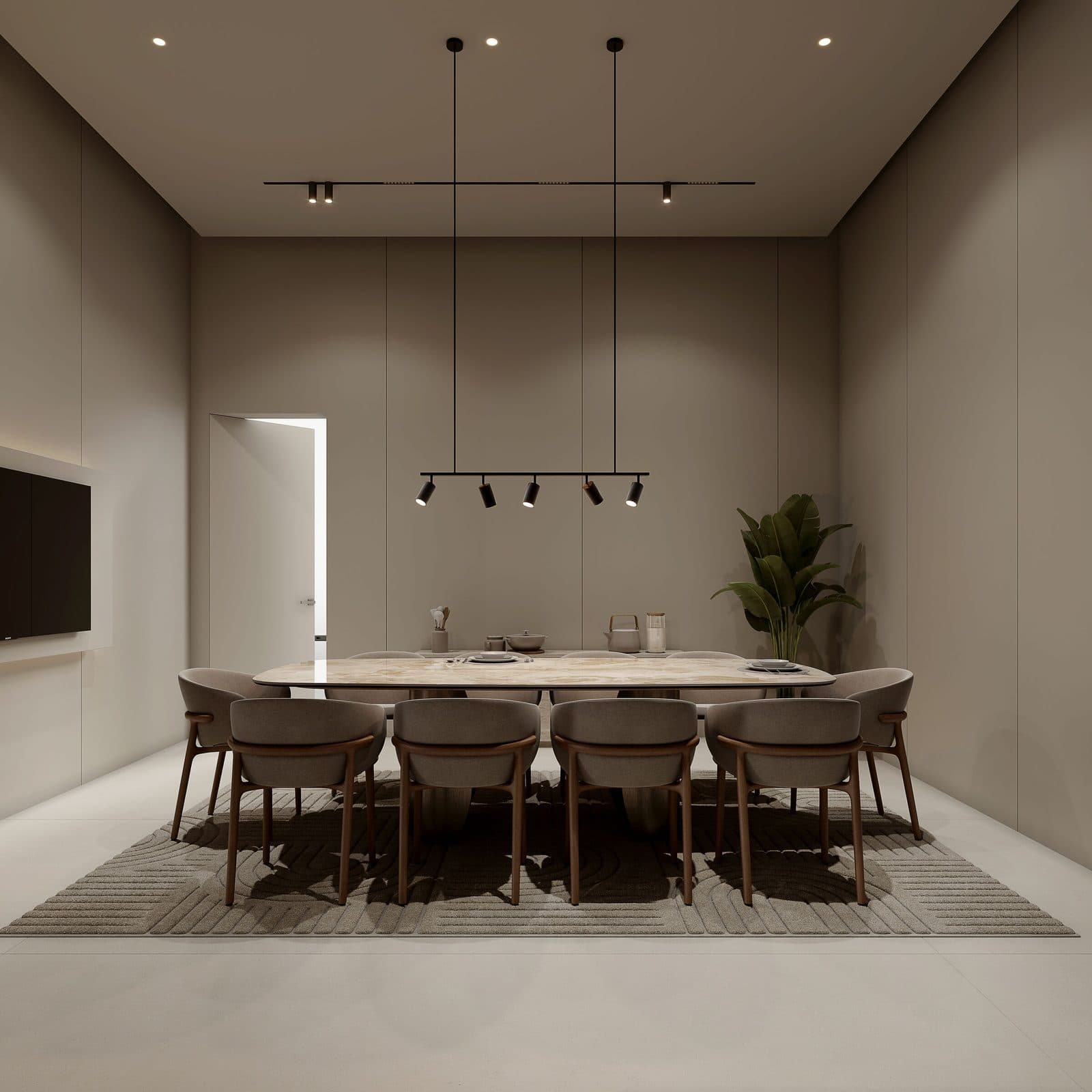
Contemporary diwaniya design often features limestone or natural stone accent walls, indirect cove lighting, custom built-in seating with deep cushioning, and ceiling details that add height and drama. The AlOsami Diwaniya on ArchDaily shows how designers are reimagining this traditional space with modern materials while preserving its social purpose.
At ZNSO, we approach diwaniya design as an architectural problem, not a furniture problem. The proportions of the room, the acoustics, the quality of light: these elements matter more than the sofa selection.
Flow and Transition: Moving Between Indoor and Outdoor Living
Kuwait's climate means outdoor living is seasonal. For roughly four to five months, gardens, terraces, and pool areas become extensions of the home. The rest of the year, they're viewed through glass.
This creates a design challenge. Indoor to outdoor transitions need to work both ways: open and connected during mild weather, sealed and climate controlled during summer. Sliding glass systems, covered transitional zones, and carefully positioned facade elements that control thermal performance help solve this.
Our Osama Residence shows how contemporary villa design can create fluid connections between interior living spaces and pool areas without sacrificing energy performance.
Choosing the Right Materials for Kuwait's Climate
Material selection is where luxury villa interior design in Kuwait diverges most from international norms. What looks stunning in a European showroom may crack, fade, or deteriorate within a few years here.
In Kuwait's climate, where summer temperatures exceed 50°C and humidity can reach 90%, interior material selection is a performance decision. Porcelain tile, natural marble, and engineered stone outperform solid hardwood and standard laminate, which can warp and degrade under thermal stress.
Flooring: Porcelain, Natural Stone, and Engineered Alternatives
Flooring carries the most wear and faces the biggest climate challenges. Here's how the main options compare:
| Material | Heat Resistance | Humidity Tolerance | Maintenance | Best Used In |
|---|---|---|---|---|
| Porcelain Tile | Excellent | Excellent (~0.5% water absorption) | Low | Whole home, high traffic areas |
| Natural Marble | Good | Moderate (requires sealing) | Medium | Formal areas, reception halls |
| Travertine | Good | Moderate | Medium | Diwaniya, transitional spaces |
| Terrazzo | Excellent | Excellent | Low | Contemporary interiors, open plan areas |
| Engineered Wood | Moderate | Good (better than solid wood) | Medium | Bedrooms, private living rooms |
| Solid Hardwood | Poor | Poor (warping risk) | High | Not recommended for Kuwait |
Porcelain tile is the most reliable choice overall. With a water absorption rate of roughly 0.5%, it's effectively waterproof and handles thermal cycling without cracking. Natural marble and travertine add warmth to formal spaces but need proper sealing and regular maintenance.
"We specify sustainable materials that work for Kuwait's climate across every project. The best interior material isn't the most expensive one. It's the one that still looks right in ten years."
— Salman Al-Nasser, Principal Architect, ZNSO Architects
Wall Finishes: From Limestone Cladding to Limewash Textures
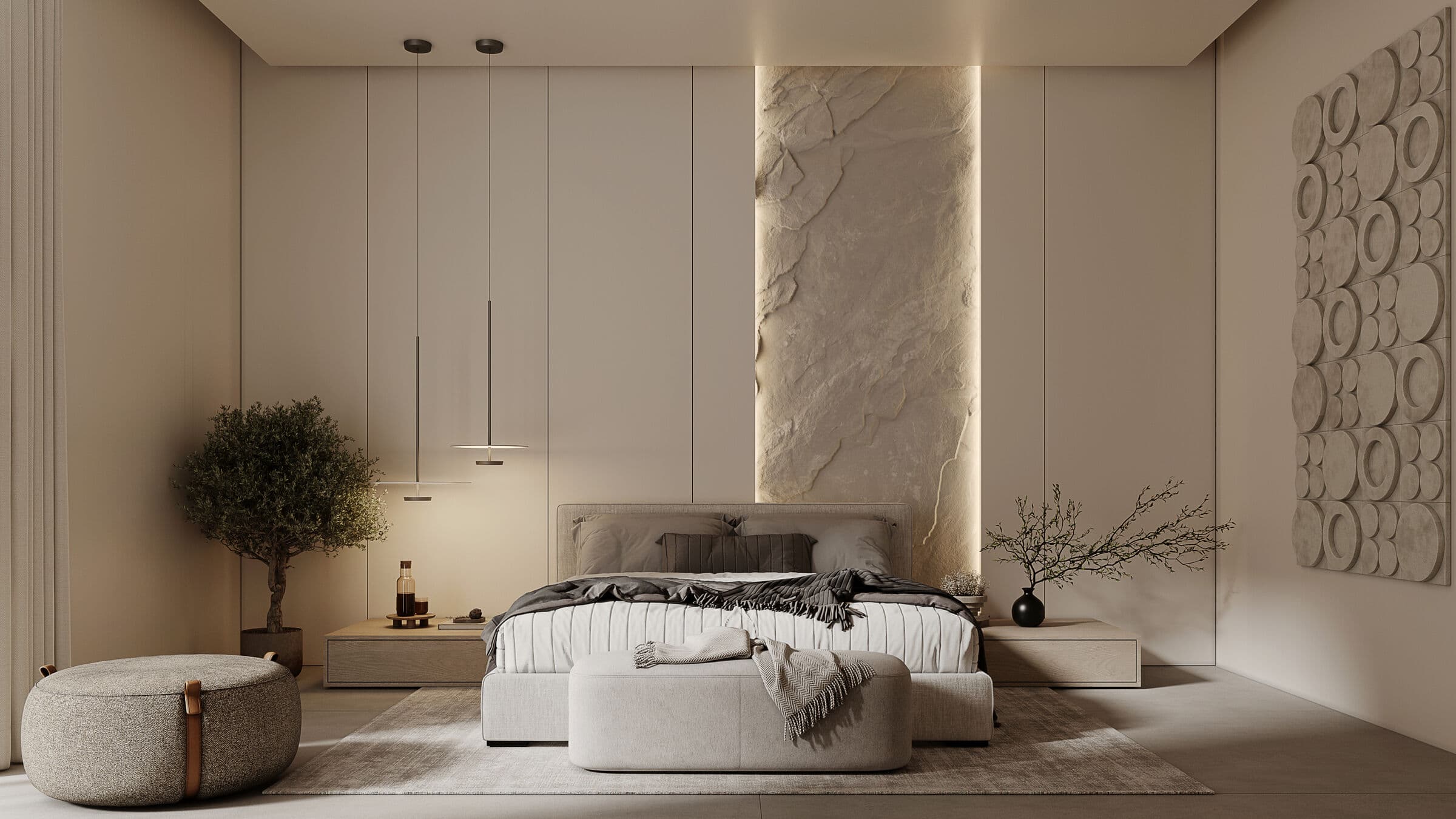
Walls define the feel of a room more than most people realize. In modern villa interiors in Kuwait, three finishes perform well: limestone cladding for accent walls (especially in diwaniyas), limewash plaster for soft textured surfaces that catch light beautifully, and micro cement for a clean contemporary look with excellent durability.
Wallpaper can work in climate controlled bedrooms, but it's risky in transitional spaces where humidity fluctuations occur near exterior doors. We learned this on an early project where imported grass cloth wallpaper bubbled within a single summer. Now we reserve wallpaper for fully interior rooms with stable climate control.
Countertops and Surfaces: Performance Meets Aesthetics
Kitchen and bathroom surfaces face the toughest conditions. Quartzite and engineered quartz offer the best combination of beauty and durability. Natural marble is gorgeous on a bathroom vanity but requires vigilant sealing in wet areas. For kitchen islands, engineered options outperform natural stone in stain resistance and heat tolerance.
Our Amal Residence is a good example. The material palette balanced honed natural stone in living areas with engineered quartz in the kitchen and bathrooms, giving every room a premium feel without compromising durability.
Lighting Design for Intense Sunlight Environments
Lighting might be the most underestimated element of villa interior architecture in Kuwait. For eight or more months of the year, direct sunlight brings extreme glare and solar heat gain. Managing that while keeping interiors bright takes careful planning.
Managing Natural Light Without the Heat
But how do you get natural light into a villa without turning it into a greenhouse? The goal isn't to block sunlight. It's to filter and redirect it. Effective strategies include recessed glazing (setting windows deeper into the wall for natural shade), interior courtyards that bring soft reflected light into central rooms, automated shading systems, and low emissivity glass that cuts heat transfer while maintaining transparency.
The relationship between how your facade affects interior light is direct. Deep overhangs, perforated screens, and carefully angled openings can transform harsh Gulf sunlight into gentle, diffused illumination indoors.
Layered Artificial Lighting: Ambient, Task, and Accent
The best modern villa interiors combine all three layers with dimming controls, letting homeowners shift the mood from bright and energized during the day to warm and intimate in the evening. Ambient lighting provides general room illumination through recessed ceiling fixtures or cove lighting. Task lighting focuses on kitchen prep zones, reading nooks, and vanity mirrors. Accent lighting highlights architectural features, artwork, and material textures.
In our Hassan Residence project, the lighting design was developed alongside the custom furniture and material selections. Every surface was tested under different light temperatures to make sure it looked its best at every hour. That kind of coordination doesn't happen when you hire separate teams who never speak to each other.
2026 Interior Design Trends That Work for Kuwait
Not every global trend makes sense in the Gulf. Here are the movements shaping modern villa interior design in Kuwait right now, filtered through a local lens.
Warm Minimalism and Quiet Luxury
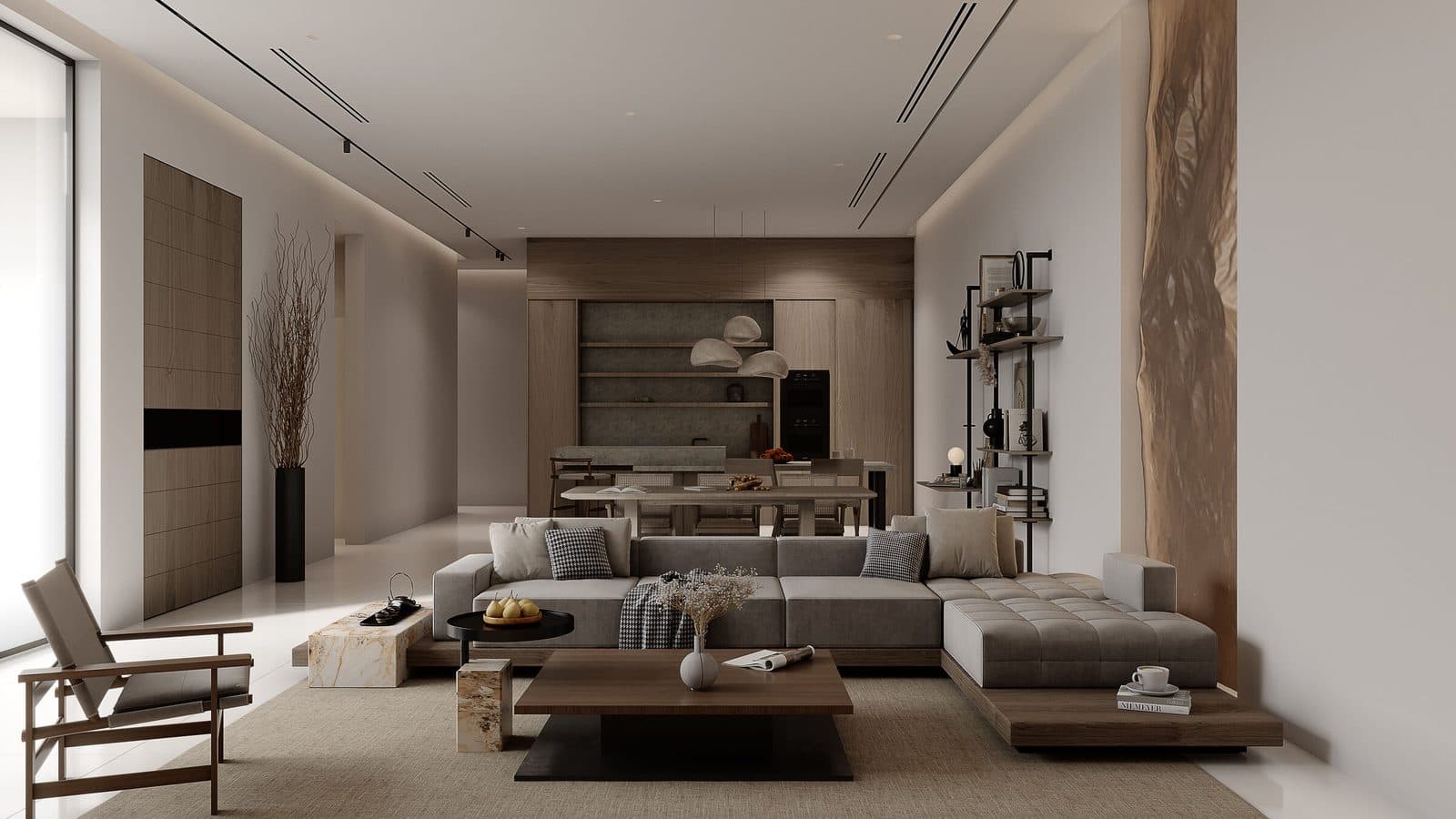
The dominant interior design trend for luxury villas in 2026 is warm minimalism, sometimes called "quiet luxury." The idea: fewer, better pieces with natural materials, layered textures, and neutral color palettes that prioritize comfort over visual noise.
Pantone's 2026 Color of the Year, Cloud Dancer (PANTONE 11-4201), captures this mood. It's not clinical or cold. It's warm, calm, and grounding.
This trend fits Kuwait beautifully. It complements the local preference for generous, airy spaces and natural stone tones. And it ages well, which matters when you're investing in materials meant to last decades. Our Lucid Living project embodies this approach: clean lines, a neutral palette, and natural light as the primary design element.
Statement Ceilings and Curved Forms
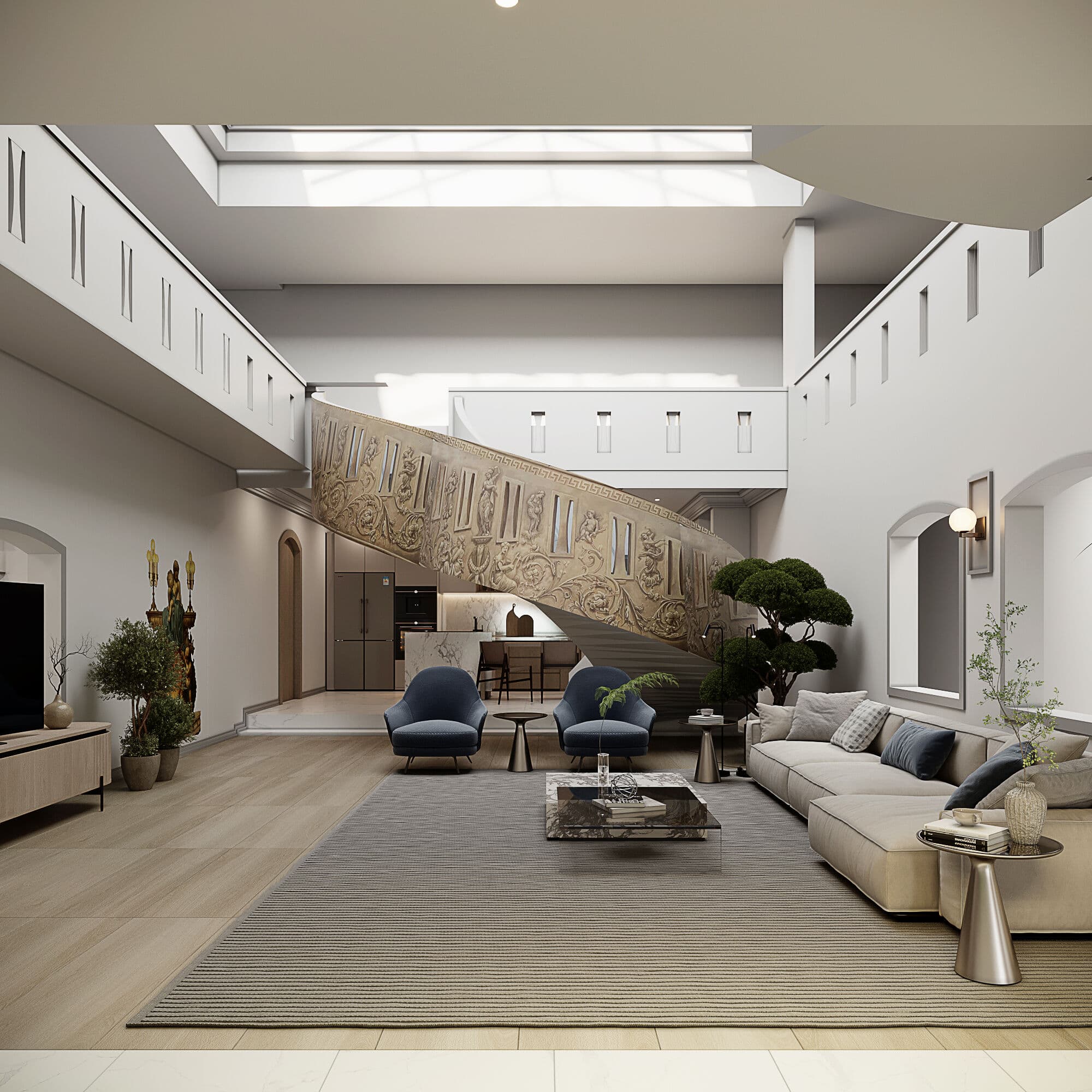
Double height ceilings have always been popular in Kuwaiti villas. In 2026, designers are turning them into focal points with coffered details, integrated cove lighting, and curved plaster forms. Arches and rounded doorways are replacing sharp angular openings in reception areas and transitional spaces.
Curved forms show up in custom furniture, lighting fixtures, and bathroom vanities too. The effect is softer and more organic, a natural complement to the warm minimalism palette.
Concealed Technology and Wellness Spaces
Smart home systems aren't new, but the direction has shifted. Instead of visible screens and control panels, the 2026 approach hides technology entirely. Motorized curtains, integrated speakers, climate zoning, and lighting scenes all operate from a phone or voice commands with no hardware visible.
Wellness spaces are growing too. Compact saunas, steam rooms, and meditation rooms are appearing in more villa floor plans. Biophilic design principles, which bring natural elements indoors through living walls, water features, and organic materials, make these spaces feel restorative rather than clinical.
With Kuwait Vision 2035 targeting over 65,500 new housing units, the next wave of residential construction will likely set higher expectations for integrated wellness and smart home features.
Frequently Asked Questions
What is the difference between an interior designer and an interior architect?
An interior designer focuses on finishes, furniture, colors, and decorative elements. An interior architect goes deeper: spatial layout, structural modifications, lighting integration, and how the building itself shapes the interior experience. For villa projects in Kuwait, where climate and cultural needs both matter, an interior architect provides a more complete solution.
How long does villa interior design take in Kuwait?
A full villa interior design project typically takes 4 to 8 months from concept to completion, depending on size and scope. The design phase (space planning, material selection, detailed drawings) usually takes 8 to 12 weeks. Procurement and installation add another 3 to 5 months. Custom furniture and imported materials can extend timelines.
Which flooring is best for villas in Kuwait?
Porcelain tile is the most reliable choice for whole home use in Kuwait: low water absorption (around 0.5%), excellent heat resistance, and low maintenance. Natural marble and travertine work well in formal areas but need regular sealing. Engineered wood is reasonable for bedrooms, though solid hardwood is not recommended due to Kuwait's heat and humidity.
How much does luxury villa interior design cost in Kuwait?
Costs vary widely based on villa size, material quality, and the extent of custom work. As a general range, full interior design for a luxury villa in Kuwait (excluding furniture) runs from roughly KD 80 to KD 200+ per square meter. Premium natural stone, bespoke millwork, and integrated smart home systems push costs higher. The best way to get an accurate estimate is through a design consultation tailored to your project.
Your Villa Interior Starts with a Conversation
The best interiors don't start with a mood board. They start with questions. How does your family live? What spaces matter most to you? Where does the light come from, and how should it behave?
Luxury villa interior design in Kuwait is about much more than aesthetics. It's how your home handles the heat. How it welcomes guests while protecting your family's privacy. How materials feel underfoot ten years from now. The homes that get this right share one thing: the interior was designed from the architecture outward, not added as an afterthought.
If you're planning a new villa interior or rethinking an existing one, start with a conversation. Our interior design services team works from architecture outward, making sure every detail is designed for how you actually live in Kuwait.