ZNSO Architects
Design Studio
By mid afternoon in July, an unshaded concrete pool deck in Kuwait City can reach surface temperatures above 65°C. That’s hot enough to cause contact burns in under five seconds. The pool water itself, without proper depth engineering and circulation, turns into a tepid bath by noon. And the garden you spent months planting? If the species weren’t selected for salinity, drought, and 50°C air temperatures, it’s already dying by its second summer.
Outdoor architecture in Kuwait is not a matter of decoration. It is performance design under extreme thermal stress, where every material, angle, and planted species has to earn its place. This article breaks down how architects in Kuwait approach the design of pools, pavilions, and landscapes. Not the ones that look good on a render, but the ones that actually work through the harshest months of the year.
How Architects Design Outdoor Spaces for Kuwait’s Climate
Kuwait holds some of the highest recorded air temperatures on Earth. In May 2024, the Al Jahra weather station logged 51°C, making it the hottest location globally that day (CGTN, 2024). The following April, the Mataraba station recorded 49°C, again the highest temperature anywhere in the world on that date (Gulf News, 2025). These are not outliers. The number of days per year above 50°C has more than tripled since the year 2000, according to Kuwaiti meteorologist Essa Ramadan (Phys.org, 2023).
For architects, this data translates into a very specific design brief. Outdoor spaces must account for direct solar radiation that can push surface temperatures 15 to 20°C above ambient air. They must withstand seasonal dust storms driven by the northwesterly shamal winds, which carry abrasive particles from Iraq and Saudi Arabia between late May and mid July. And they must perform under water scarcity constraints that make conventional irrigation dependent landscapes impractical.
Standard approaches borrowed from Mediterranean or even Dubai design manuals don’t transfer directly. Kuwait’s inland climate is drier and more extreme than coastal Dubai, with lower humidity and sharper temperature swings between day and night. The soil is predominantly sandy and highly saline. These conditions shape every decision from foundation drainage to plant root depth.
ZNSO’s architectural design and consultation services are built around this reality. Every outdoor project starts with climate data, not a mood board.
Pool Design for Kuwait Villas: Engineering Below the Surface
A pool in Kuwait is not just a water feature. It’s a thermal regulation system. It has to manage heat gain across an exposed water surface, resist chemical degradation from high UV exposure, and remain usable during months when air temperatures routinely exceed 48°C.
Depth is the first variable. In our experience, clients who skip the depth conversation during design end up retrofitting shade structures within the first year. Shallow pools heat faster and more uniformly, which sounds appealing until you realize that a 1.2 meter deep pool in full Kuwait sun can reach 38°C by early afternoon. That feels less like a swim and more like a warm bath. Designing with varied depth zones, including sections at 1.8 meters or deeper, creates thermal layering that keeps lower depths noticeably cooler.
Circulation design matters just as much. Oversized return jets positioned to promote vertical water movement pull cooler water from the bottom and mix it upward. Combined with shaded zones over a portion of the pool surface, the difference between a usable pool and an abandoned one is largely an engineering question. Even 30% shade coverage can reduce water temperature by 3 to 5°C.
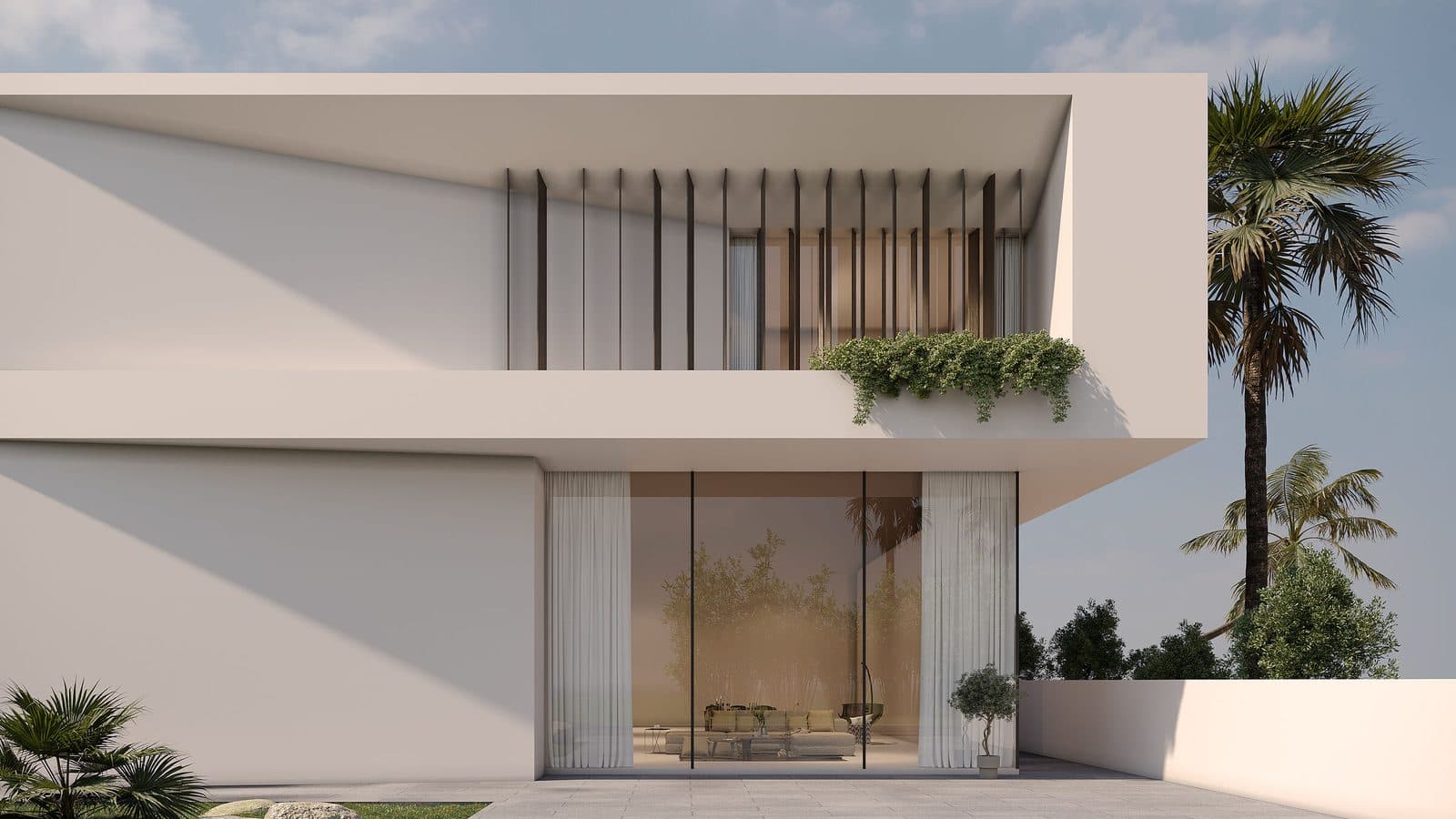
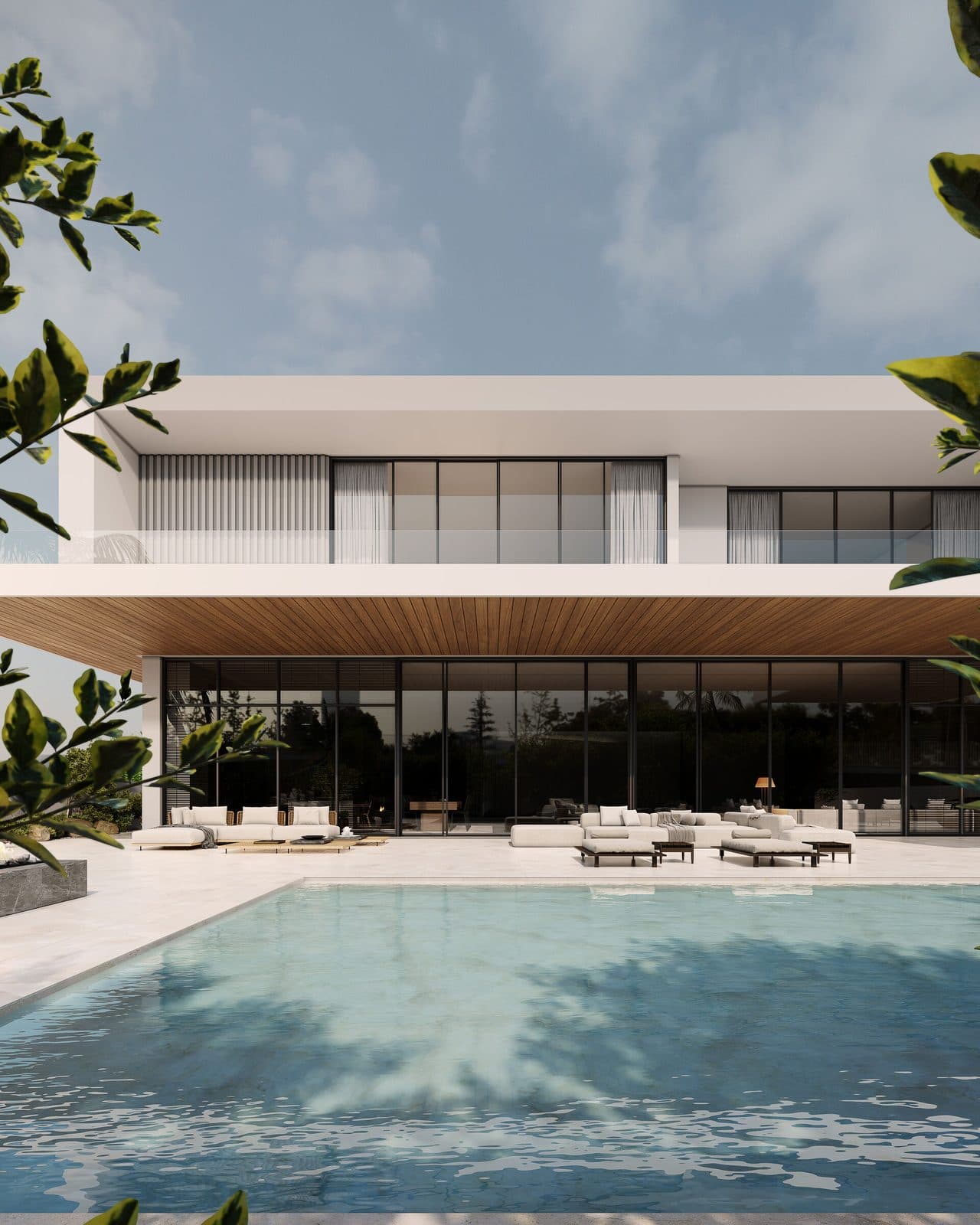
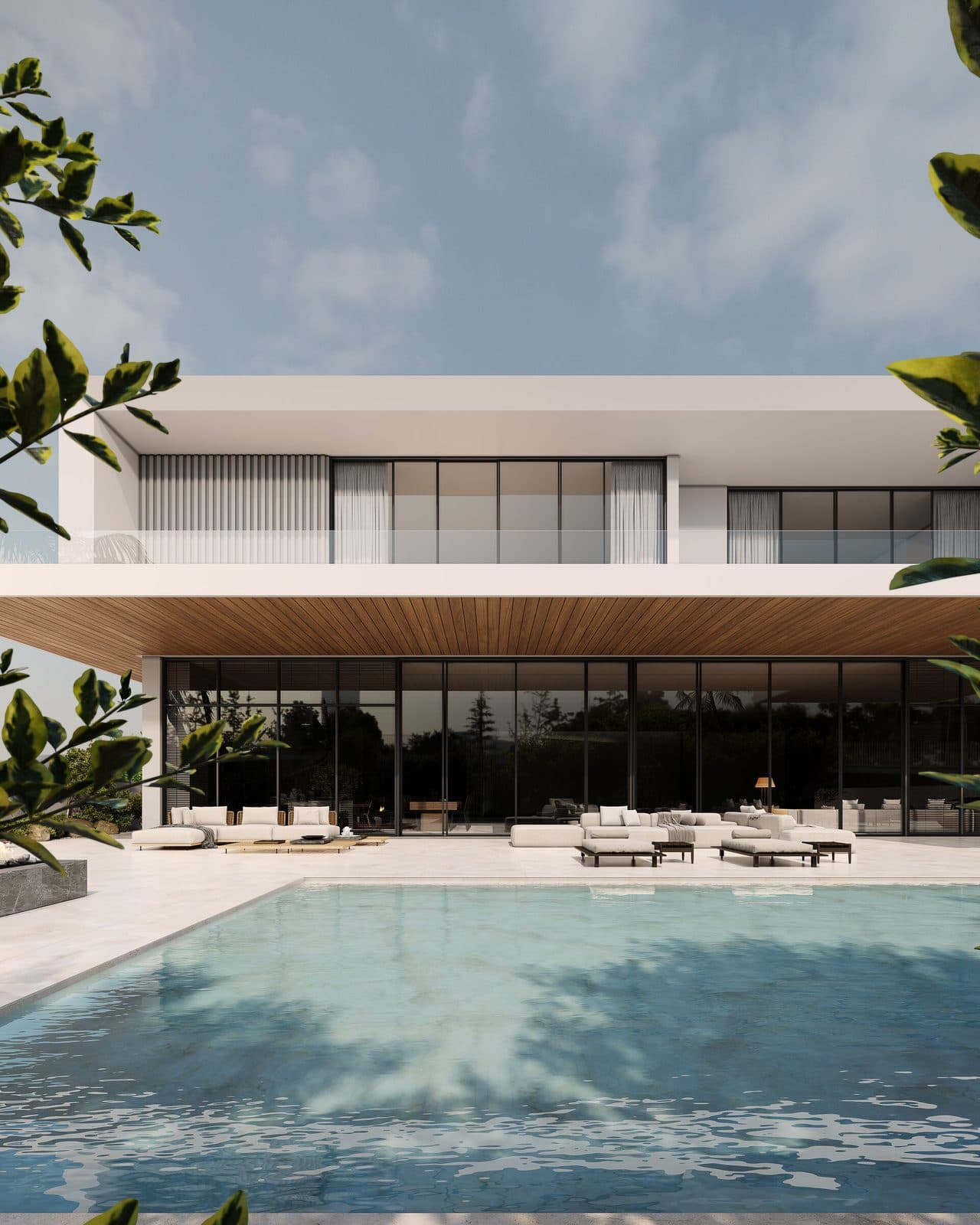
In the Osama Residence pool design, the pool was treated as an extension of the interior living space. Material continuity between indoor floors and the pool surround creates a single connected sequence. The result is an outdoor volume that reads as architecture, not as an accessory bolted onto the back of the house.
Choosing Pool Materials for Kuwait Weather
So what about materials? The best pool materials for Kuwait weather share a few characteristics. They resist UV degradation, tolerate high chlorine or salt concentrations, and don’t absorb excessive heat. Glass mosaic tile remains a popular interior pool finish for its chemical resistance and color stability. For pool decking and coping, porcelain pavers rated above 0.6 on the Solar Reflectance Index outperform natural stone in Kuwait’s direct sun exposure. They reduce surface temperatures by up to 15°C compared to darker alternatives.
Color selection is not just aesthetic either. Lighter tones reflect more solar radiation and keep surfaces cooler underfoot. Darker finishes may look striking in a portfolio photo, but they become unusable by mid morning in a Kuwait summer. That tradeoff between visual drama and thermal performance is one of the first conversations we have with clients during the design phase.
Pavilion Design: Shade as Architecture
In climates where outdoor temperatures are comfortable year round, a pavilion is a nice addition. In Kuwait, a pavilion is the difference between an outdoor space that gets used and one that sits empty for eight months.
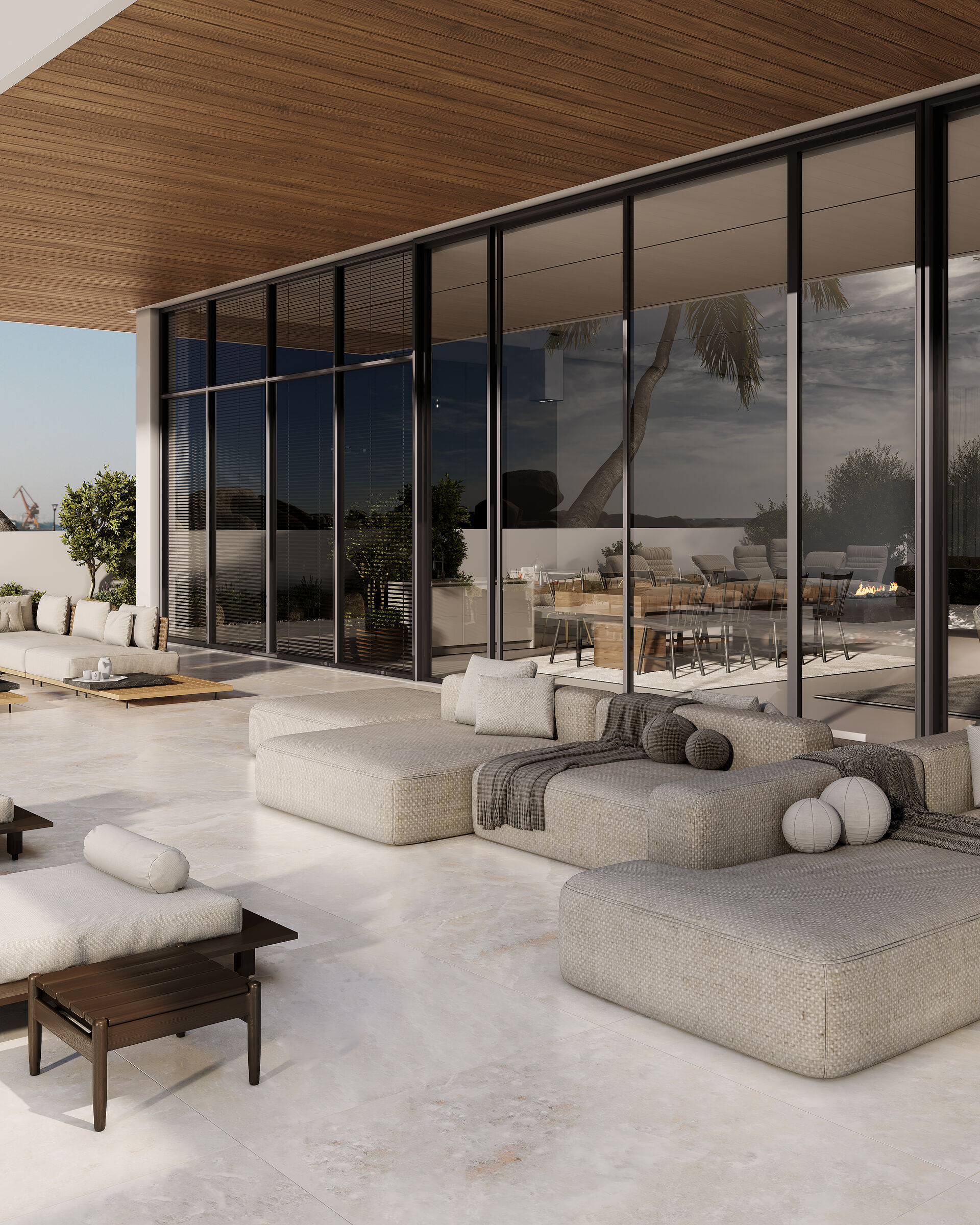
The best pavilion design in Kuwait treats shade not as an accessory but as the primary architectural move. Roof pitch, overhang depth, and orientation relative to the sun’s seasonal arc all determine whether a terrace is comfortable at 2 PM in August or only in December. A south facing overhang of 1.5 meters provides meaningful shade during peak summer when the sun is high. In winter, the lower sun angle lets warming light penetrate the space.
In the Poolside Pavilion project, the relationship between water, shade structure, and surrounding planted area was treated as a single integrated system. The pavilion was not designed first and the landscape added later. The shade canopy, the pool edge, and the planting beds were conceived as one continuous outdoor room, calibrated to work together across seasons.
“A pavilion in Kuwait is the difference between an outdoor space that gets used and one that sits empty for eight months.”
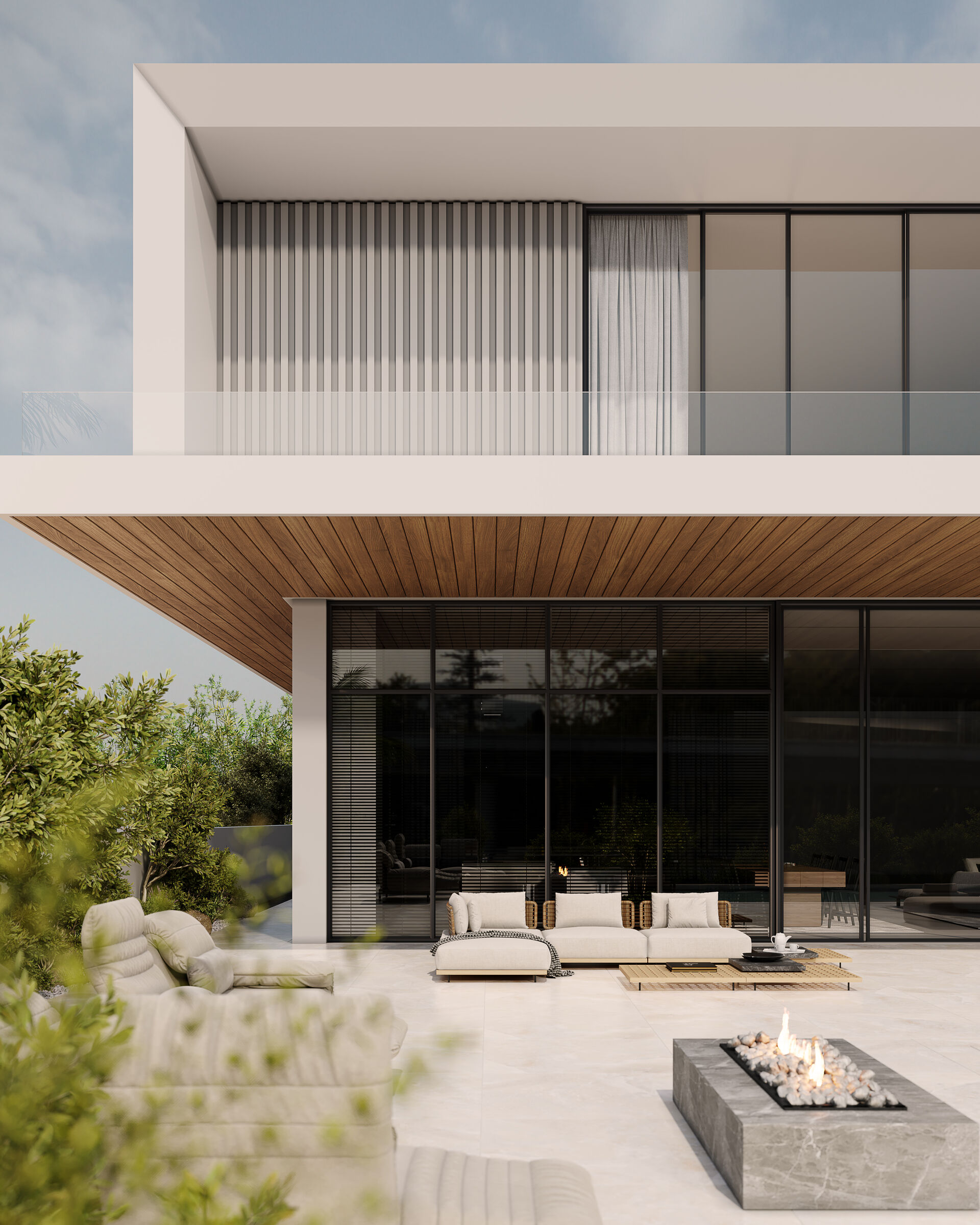
Material choice for pavilion structures in this climate leans toward thermally stable options: steel frames with powder coated finishes, aluminum pergola systems, and concrete with light colored surface treatments. Timber, while beautiful, requires heavy ongoing maintenance in Kuwait’s UV and dust conditions. The current trend toward indoor outdoor living in Gulf architecture is pushing pavilion design beyond simple shade covers. The best examples are fully equipped outdoor rooms with integrated lighting, ventilation, and misting systems that reduce ambient temperature by 5 to 8°C.
Landscape Design That Survives a Kuwait Summer
The most expensive landscape in Kuwait is the one you have to replace every two years. And it happens more often than most homeowners expect. Conventional ornamental planting, the kind you’d see in a European garden catalog, rarely survives more than one full Kuwait summer without intensive, wasteful irrigation.
A luxury villa landscape architect in Kuwait City starts with the soil. We’ve seen villa landscapes fail within 18 months because the soil wasn’t tested for salinity before planting. Kuwait’s ground is sandy, saline, and nutrient poor. Before a single plant goes in, soil amendment with organic compost and proper drainage layering is required. Without this step, even drought adapted species struggle to establish root systems.
Plant selection is where climate responsive landscape design Kuwait separates from generic approaches. Native and near native species like Sidr (Ziziphus spina christi), Ghaf (Prosopis cineraria), and Acacia tortilis have evolved root systems that reach deep into arid soils. Once established, they require minimal irrigation. The Sidr tree, with its dense foliage, provides permanent shade and carries cultural significance in the Gulf region. These species are not compromises. They’re the foundation of a landscape that actually lasts.
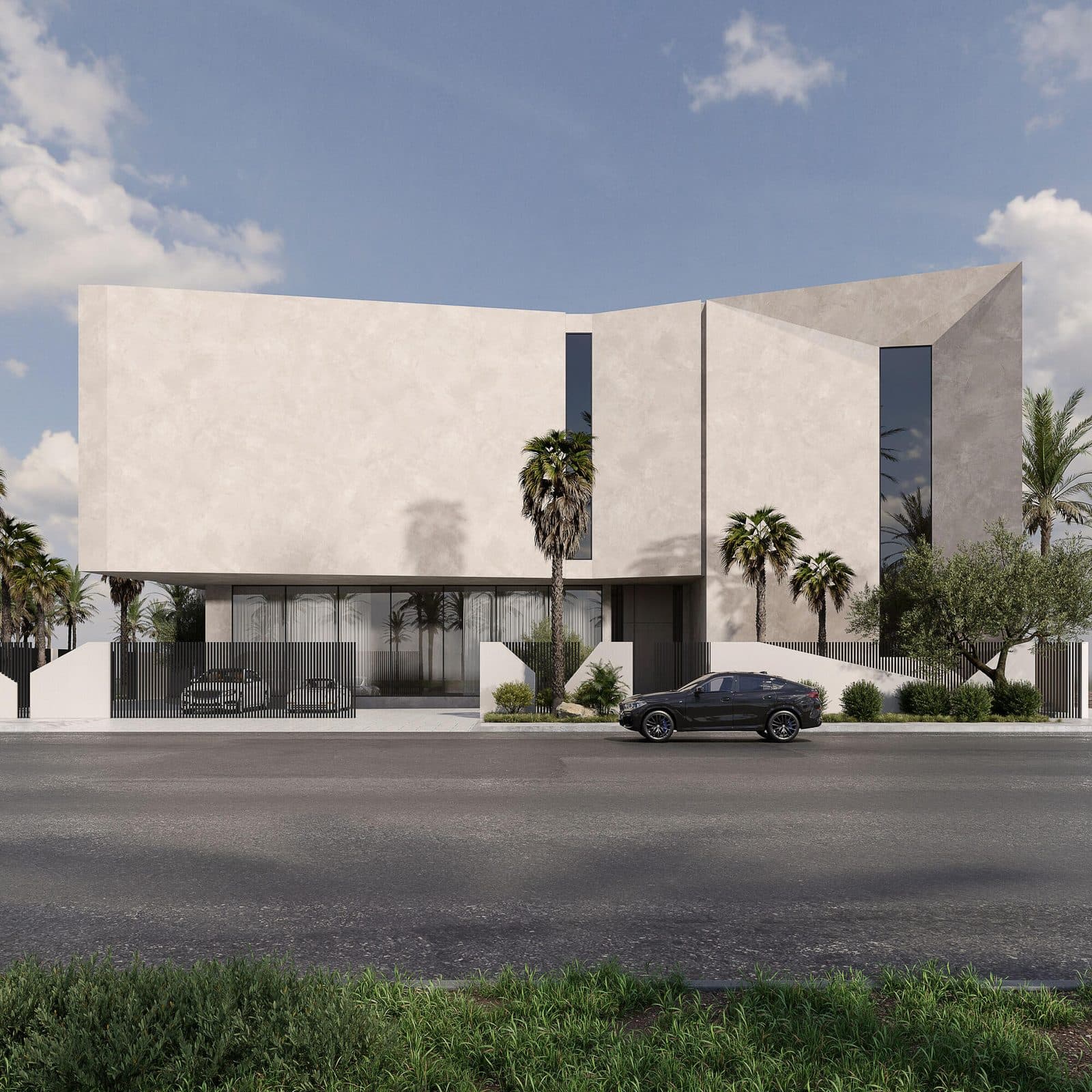
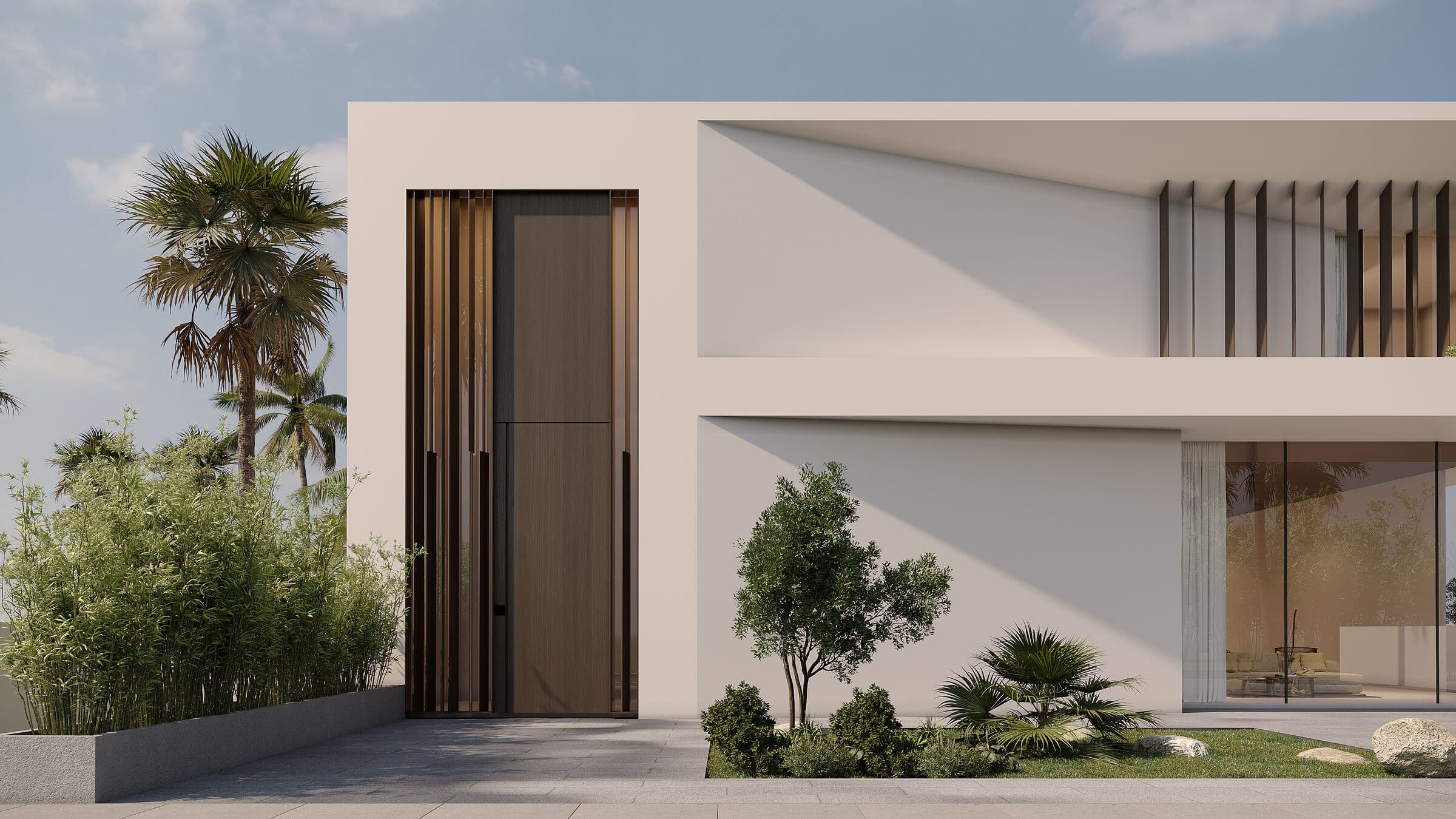
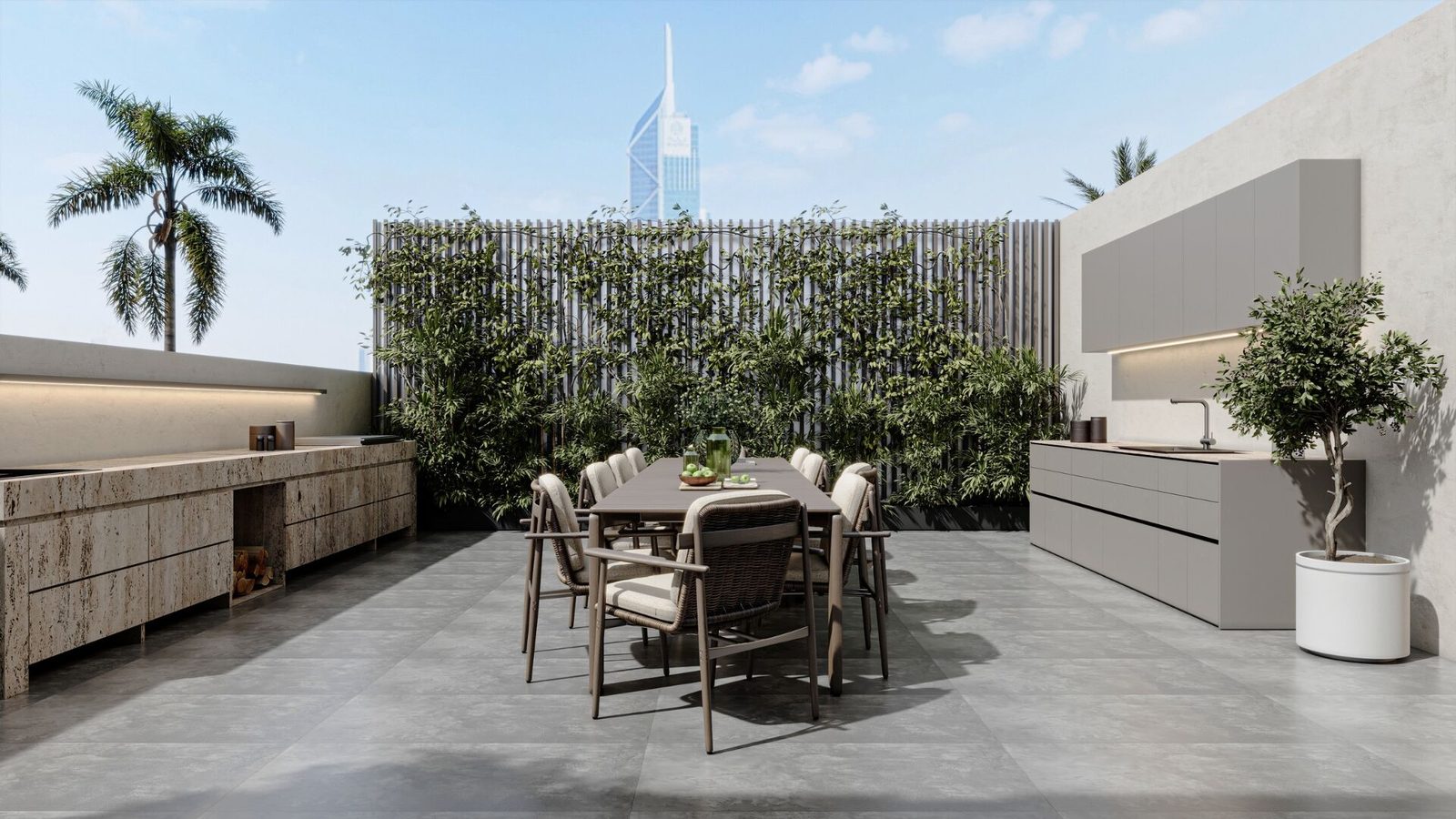
In the Dana Residence landscape and architecture, the landscape design integrates architecture, interior, and planted zones into one connected composition. It demonstrates how hardscape and softscape can work together when planned from the start rather than treated as separate line items.
For hardscape surfaces, light toned porcelain pavers with high Solar Reflectance Index ratings (above 60%) are becoming standard in high performance Kuwait villa landscapes. Compared to traditional dark stone, these pavers can reduce surface temperature by 10 to 15°C. That’s a measurable difference when you’re walking barefoot from the house to the pool. Greywater recycling systems for landscape irrigation are also gaining traction across the GCC, reducing dependency on desalinated water while keeping planted areas healthy through the dry months.
Biophilic Design and Wellness in Kuwait’s Outdoor Spaces
So why invest in outdoor spaces if you can only use them comfortably for part of the year? Because when those spaces are designed well, they change how people live.
Biophilic landscape design in 2026 is one of the strongest trends in residential architecture globally, and it carries particular relevance in Kuwait. The core idea is simple: design outdoor spaces that strengthen the connection between people and the natural environment. In a country where the climate pushes residents indoors for much of the year, well designed outdoor zones become genuinely therapeutic.
Wellness oriented outdoor spaces in Kuwait draw on both international design thinking and local traditions. The diwaniya, Kuwait’s traditional gathering room, has historically been an indoor social space. But its underlying purpose, creating a comfortable zone for conversation and community, translates directly to outdoor architecture when the climate conditions are managed through shade, ventilation, and material selection.
Sensory design plays a role here. The sound of moving water from a pool or fountain. The texture of natural stone underfoot. The scent of native plantings like jasmine or Bougainvillea. These aren’t decorative choices. Multiple systematic reviews confirm that well designed green spaces improve both relaxation and social connection (PMC, 2021). Those benefits are amplified when outdoor time is limited by climate constraints, as it is in Kuwait for much of the year.
The practical translation is straightforward. Layered planting that includes ground cover, mid height shrubs, and canopy trees creates microclimate zones within a garden. In our projects, a well placed Ghaf tree can reduce ground temperature beneath its canopy by 8 to 12°C compared to exposed areas nearby. Combined with smart irrigation systems that monitor soil moisture and adjust output automatically, these landscapes sustain themselves through Kuwait’s dry months without manual intervention or waste.
What Makes Outdoor Architecture in Kuwait Different
Outdoor architecture in Kuwait is not about creating a space that photographs well from one angle. It is about engineering environments that perform under conditions most design manuals don’t account for: 50°C air temperatures, saline soil, dust abrasion, and water scarcity. Every surface, structure, and planted element has to justify its presence through measurable performance, not just visual appeal.
The firms that do this well treat outdoor spaces with the same rigor they apply to building envelopes and interior systems. Very few are producing content or sharing their process publicly. Pools are thermal systems. Pavilions are shade instruments. Landscapes are living infrastructure.
If your next project in Kuwait calls for outdoor spaces that perform as precisely as they present, we welcome that conversation. From pool engineering to landscape material selection and pavilion design, you can explore our outdoor and residential projects or reach out through our consultation page to discuss what’s possible.